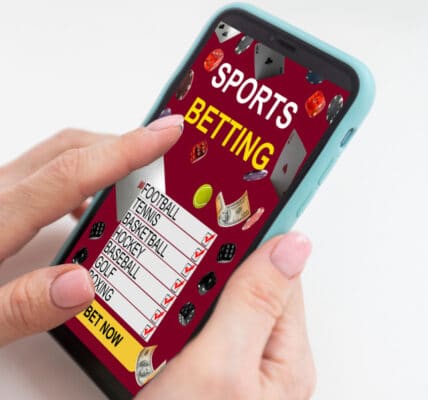
Are Gambling and Prediction Markets Bioweapons?

The new book, Biological War: A Scenario, by Pulitzer Prize nominee Annie Jacobsen, describes the results from a hypothetical lab leak of a genetically engineered plague. The two-stage “chimera” at first generates a euphoric feeling so people spread the pathogen before symptoms appear.
Gambling platforms are similarly engineered phone applications designed to provide an initial euphoria that often leads to crippling, life-threatening losses.
The idea of bioengineering an unstoppable pathogen is sinister and twofold. First, the pathogen kills people, quickly, while leaving their assets intact. Second, by engineering the pathogen, you are supposedly able to engineer a vaccine that protects only those who have it.
Gambling and prediction platforms have reversed the idea of a biowarfare pathogen. Instead of killing people and leaving their assets intact, they remove all the host’s assets, leaving the body alive to face the consequences. It is an AI-enhanced, scientifically engineered application designed to infect users and drain their bank accounts.
Let’s take a look at The Hill, where philosopher John Mac Ghlionn describes how artificial intelligence is being used by gambling platforms to “intensify America’s gambling crisis.” He describes the process:
Data collection turns this total access into an asymmetric war. A gambling giant like DraftKings, which in many ways functions as a tech company, doesn’t treat its millions of users as a single, uniform crowd. Every user is an individual psychological puzzle waiting for predictive modeling to solve.
Whenever the app offers a bonus or premium, it measures what it takes to bring the user back and which channels of communication the user responds to: ads, texts, emails, pop-ups? They stalk users and test their limits. “This brutal system is designed to identify your impulses and monetize them, over and over again,” writes Ghlionn.
Unlike with substance use disorders, gamblers don’t pass out; they double down. The only thing that can relieve the pain of catastrophic losses is a stunning victory that wipes away all their previous stupid decisions. In this way, gambling platforms harness the power of displacement, which is behind the appeal of both substance use disorders and behavioral addictions.
There is an argument to be made that these are the indicators that gambling and prediction markets are bioweapons designed to spread throughout the population and lead to life-threatening financial losses.
The suicide rate for people known to have gambling addiction is through the roof. If you know someone who is considering self-injury, whether or not due to gambling debts, the government still funds the 9-8-8 crisis lifeline. Why are for-profit businesses allowed to engineer an application that leads to disproportionate suicide?
“It’s like nothing we have seen before,” writes Ghlionn. “The experience feels less like sports fandom and more like a psychotic slot machine.” He concludes his essay, which appeared in The Washington Post‘s new paywall-free Ripple newsfeed, with the following warning:
America has deregulated a multi-billion-dollar parasitic industry and handed it the most advanced system of psychological manipulation in human history. The consequences could be financially and socially ruinous.
I’ll be darned if that doesn’t sound exactly like the idea behind the bioweapon unleashed in Jacobsen’s book. Except in her book the government tries to fight the pathogen, it doesn’t roll out the red carpet for it the way our state and federal governments have embraced online gambling.
There is no effort at developing a vaccine for online gambling, although there is evidence that GLP-1 drugs help reduce the urge to gamble. Which is more evidence of a unified mechanism behind all forms of addiction.
With gambling platforms effectively taking over gambling addiction research, we can be almost certain a vaccine will never be investigated. That means that for now we are dependent upon our governments to inform gambling platforms that they may not use AI to siphon off what little wealth we still possess.
Written by Steve O’Keefe. First published November 13, 2026.
Sources:
“America’s next great addiction crisis,” The Hill, November 8, 2026.
“At DraftKings, AI Targets the Gamblers Most Likely to Lose,” The New York Times, September 19, 2026.
“Gambling-related suicides and suicidality: A systematic review of qualitative evidence,” Frontiers in Psychiatry, October 25, 2022.
Image Copyright: Tim Evanson.