Prop Bets Are an Additional Addicting Feature in Sports Gambling Apps

It’s late at night. You’ve suffered a loss and you’re depressed. Again. Time to double down, you rationalize, and give it one (or two?) more shots at a big win to fix it all. What games are on right now? You reach for your phone. Again.
Somewhere a game is on… Somewhere else, a light in a giant data center blips, and the algorithmic symphony starts, manipulating your responses to keep going and extract whatever of your money remains. TOUCHDOWN.
Sports gambling has always existed. But truly legal options have really only proliferated since 2018, when the Supreme Court struck down the Professional and Amateur Sports Protection Act (PASPA), allowing states to regulate sports betting as they see fit. So far, the incentives are clear: Everyone sees money to be made.
Two lawsuits and a ruling on addiction
Recently, ESPN reported on a lawsuit filed against sportsbooks DraftKings and FanDuel. The lawsuit accuses these platforms of engineering addictive behavioral responses in order to keep wallets open. This is the second lawsuit in conjunction with the Public Health Advocacy Institute, a legal research center at Northeastern University. Given that the court just ruled that tech addiction is real, someone, somewhere has odds on how it will impact this extremely lucrative industry.
Gambling wins and losses can punch up and manipulate the same brain responses, cravings, and addiction cycles that run through all addictions. The triggers and need to escalate are the exact playbook the body takes in response to the brain, as Dr. Pretlow explains in his Unified Theory of Addiction.
Prop Bets are one technical innovation
Pick your poison: Delivery technology and retention technology are always evolving. Nowhere is this more visible than in the highs and lows delivered digitally through ones and zeros. Anything delivered electronically is especially enticing to producers in pursuit of repeat customers. “Prop bets” (short for proposition betting) are just one such extractive innovation.
These enticing in-game “prop bets” allow betting on small things that happen during a game but don’t necessarily impact the game’s outcome. One example: how many times a player makes a particular gesture. This allows for multiple bets before and throughout any game. Or, multiple times, you can feed your brain a hit of dopamine.
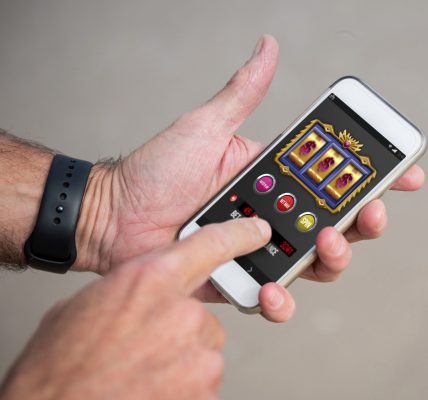
Self-certifying “age gating” mechanisms exist at a bare minimum, making online or in-app gambling particularly easy to start. Repeated use is easy to maintain, given the ubiquity of phone adoption. Why wouldn’t a company be incentivized to double down on algorithmic methods to entice? Or target those most willing to play?
Risk and protective factors in youth gambling
Early studies seem to suggest that young men are disproportionately harmed by gambling. A January 2026 study from Zimbabwe echoes what we see globally when describing risk and protective factors of many addictions:
Gambling among youth is increasing and has caused concern in Zimbabwe; it affects not only the individuals but also those close to the gambler and the community at large. […] The study identified various risk factors that contribute to the development of gambling problems among youths in Harare, categorised into intrapersonal and interpersonal factors. […] Among the intrapersonal risk factors, peer influence, family influence, community influence, cultural influences and accessibility were recognised.
But, even without known risk factors, betting can be exciting and quickly get out of hand. It is an addiction that might not be obvious to oneself or others, at least at first. Reports Hopkins Bloomberg Public Health:
“There could be a day when I made 500 bets, and that wouldn’t have phased me whatsoever,” says Biehl, a 28-year-old Pennsylvania pharmacist. “No one knew about my gambling at all. I didn’t know I had an issue.”
Young men might be at a heightened risk for addictive betting, but they are by no means the only people in the gambling market. The major platforms like it that way. Like any business, they want to expand.
FanDuel and DraftKings aren’t backing away from money, attention, and influence brought on by the online gambling environment. As Addiction News reported, these two franchises are betting big on the 2026 midterm elections, sending millions of dollars into political action committees (PACs), to retain market and technical leadership, even at the expense of personal addiction.
Written by Katie McCaskey. First published April 7, 2026.
Sources:
“Lawsuit accuses sportsbooks of using addictive technology,” ESPN, March 26, 2026.
“A court just ruled that tech addiction is real — and dangerous,” Fortune, March 25, 2026.
“Risk and protective factors in youth gambling,” Sabinet, January 19, 2026.
“As Online Betting Surges, So Does Risk of Addiction,” Hopkins Bloomberg Public Health, undated.
Image Copyright: achpf.