Breaking the Bond Between Cravings and Consumption
A researcher who focuses on how the brain makes memories claims that GLP-1 drugs such as Ozempic, Wegovy, Mounjaro, and Zepbound highlight the way cravings motivate consumption.
Dr. Rob Munn’s research is presented in an article in The Conversation. Dr. Munn is Director of the Neuroscience Teaching Program at the University of Otago in Dunedin, New Zealand. The University of Otago provides funding to The Conversation. There is no indication the article is peer-reviewed.
Dr. Munn begins his analysis by pointing out that the reward centers of the brain — the ventral tegmental area and the nucleus accumbens — are not rich with GLP-1 receptors.
He then turns to the lateral septum, central to a neural connectivity network that communicates with the hypothalamus and other brain regions. Damage to the lateral septum is known to cause aggressiveness, and electrical stimulation can reduce aggressiveness.
Here’s where Dr. Munn’s expertise in memory formation comes in. Long-term, episodic memories are formed in the hippocampus. The hippocampus also contains “place cells” that literally mark a person’s position in the world. These place cells strongly respond to reward. It is here that mental images are formed that cause future desire or dread.
It just so happens the lateral septum is “absolutely loaded with GLP-1 receptors,” writes Dr. Munn, pointing to some early research involving rats. The idea here is that the GLP-1 receptor agonists are interfering with the way dopamine reaches the hypothalamus, and thus interfering with cravings.
Dr. Munn cites the following evidence: GLP-1 drugs result in reduced cravings for food, alcohol, cocaine, amphetamines, opiates, and nicotine. In all cases, the neurons that usually fire when exposed to the mental imagery of consumption either aren’t firing or are firing less.
Dr. Munn summarizes:
My own lab has shown this year that GLP-1 drugs reduce a type of activity in the lateral septum that may prevent it communicating so effectively with other brain regions. These findings are reshaping our understanding of how the brain processes rewards and have put the spotlight firmly on the lateral septum as the home of cravings.
There are a few things missing from Dr. Munn’s analysis that might prove helpful in future studies. The first is that GLP-1 drugs do not just impact consumption, they also reduce behavioral compulsions, such as gambling addiction and shopping addiction.
The fact that GLP-1 affects both behavioral addictions and substance use disorders indicates a common source for the two types of disorders. That brings us to the second thing missing from Dr. Munn’s article: stress.
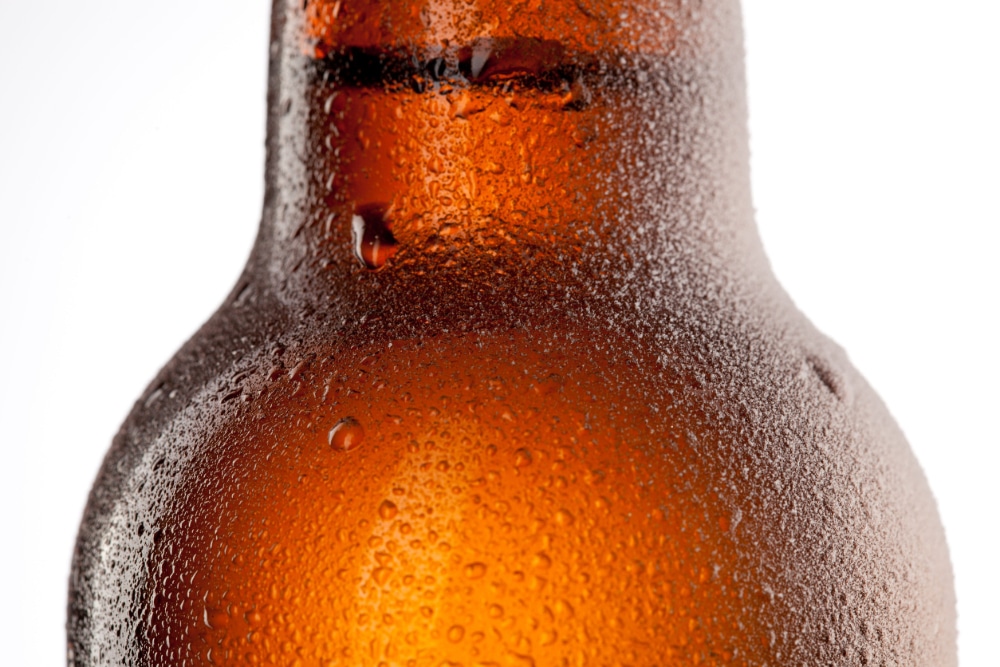
Does stress drive consumption? Does it drive compulsive behavior? When a mental image is formed involving reward, does seeing that mental image again cause stress? Yes. Cravings can be described as stress resulting from mental imagery. The sight of a sweating bottle on a hot day absolutely results in cravings.
Somehow, with GLP-1 drugs, the cravings don’t rage. The food noise or alcohol noise or gambling noise subsides. Researchers at Laval University in Quebec, Montreal, Canada, didn’t leave the stress out in their studies on the lateral septum and compulsive eating.
They note that acute stress leads to less eating, but chronic stress leads to increased eating. They also zero in on the lateral spectrum as the place where stress and consumption bond:
Studies suggest that the lateral septum is a stress-responsive and feeding regulating center of the brain.
Again, it’s not just feeding. All compulsions involve this marriage of stress and behavior, which takes place in the lateral septum and is disrupted by GLP-1 drugs. One of the ways we know that the formation of mental imagery is involved with compulsive behavior is the pioneering work of Dr. Reinout Wiers.
Dr. Weirs found that by getting people with alcohol use disorder (AUD) to “push away” images of substance use on a computer, he could reduce the amount of alcohol they consumed. His technique is now a required part of treatment for AUD in many European Union countries.
GLP-1 drugs seem to have a similar impact as Dr. Wiers’s mental conditioning. The drugs make it so the signals and cues are no longer as compelling. And the center of all this activity appears to be the lateral septum. Slowly but surely, we are getting to the bottom of the connection between GLP-1 drugs and addiction.
Written by Steve O’Keefe. First published July 3, 2026.
Sources:
“Weight‑loss drugs like Ozempic could work for addiction too — and we finally know how,” The Conversation, June 21, 2026.
“Distribution of GLP-1 Binding Sites in the Rat Brain: Evidence that Exendin-4 is a Ligand of Brain GLP-1 Binding Sites,” European Journal of Neuroscience, November 1995.
“The role of lateral septum and anterior hypothalamic area in mediating the interactive effects of stress and palatable food,” Université Laval Library, 2017.
Image Copyright: artjazz.