
Social Casino Addiction Is Serious Business
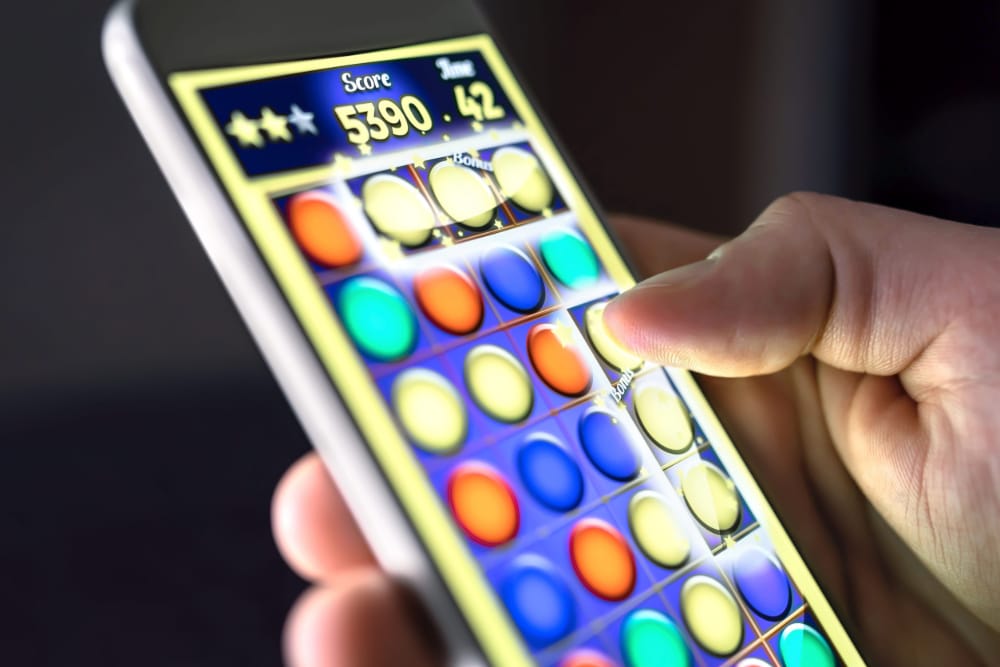
Business media giant, Bloomberg, blew the lid off a new form of gambling addiction involving millions of players every day lurking beneath the surface of supposedly “free-to-play” casino-style gaming apps.
Here’s how it works. People download the games, such as Slotmania, High 5 Casino, Jackpot Party, and Monopoly GO! They are given a limited number of free tokens to play the game. The tokens quickly run out, but players can purchase additional tokens for real money.
And purchase them they do! Bloomberg calls it a “casino-style economy” that churns an estimated $11 billion a year that’s basically hidden from regulatory oversight. Because winnings are in tokens that can never be cashed out, it is not considered gambling. It’s entertainment.
The games are called “social casinos,” because they allow players to play casino-style games such as slots, roulette, and poker, with virtual currency that can’t be cashed out. Players get hooked on the feeling of winning and “almost winning,” sometimes spending financially-crippling sums of money to continue playing the games for hours on end.
As “America’s Digital Goddess” tech talk show host, Kim Komando, points out, the social casino apps are:
[…] free to use the same psychological enticements slot machines use. Variable rewards. Near-misses. Flashing lights. Sound effects engineered in labs to hijack your brain’s reward system.
This is an addiction engineered in a lab, says Komando, who calls it “addiction by design.” The app makers have learned everything about inducing compulsive use from social media apps, gaming apps, gambling apps, and video apps. They have combined it all into a potent digital pastime, then found a way to monetize it without calling it gambling.
The depth of the rabbit hole they take players down is incredible. Here’s the description for the social casino game “Dorados” described on a website that channels prospects to dozens of social casinos:
Dorados really stands out with its “Lost City” gamification system, where players use Elixir and Claw Machine credits to unlock rewards and rebuild islands. Combined with daily challenges, a bonus wheel, and a developing VIP program, there’s plenty to keep players engaged.
According to Bloomberg, “Some players have spent more than $1 million, contemplated suicide, mortgaged houses or divorced their spouses over the games.” They report the Monopoly GO! app has generated $6 billion in revenue since its launch only three years ago, all from players paying for dice rolls, mystery stickers, and other incentives.
A Bloomberg analysis showed that Apple Inc. “makes more money from games of all kinds than it does selling laptops,” a claim they say Apple disputes. Apple and Google both take a hefty 30% of in-app purchases on gaming apps (though not on gambling apps, which operate under a different set of rules).
The psychology of gaming addiction is interesting and unusual. Players do not mind that they cannot win as long as they can continue playing. Bloomberg describes a study conducted by cultural anthropologist Natasha Dow Schüll, author of the 2012 book, Addiction by Design: Machine Gambling in Las Vegas. Compulsive players seek to stay in “the zone” where they are not aware of their problems or the time, just the steady accumulation of wins and losses.
Kim Komando suggests that users protect themselves and their families by deleting the apps and blocking in-app purchases. Bloomberg describes a more serious remedy: sue the app makers.
Litigation against social casinos has taken years to be taken seriously, but it’s there now, according to Bloomberg. They cite the victory of the Edelson law firm in a 2018 ruling by the 9th U.S. Circuit Court of Appeals that found virtual tokens are “a thing of value.” Since then, Edelson has sued most of the major social casinos under Washington State’s consumer protection laws. Most of the apps have settled, but High 5 Casino has not, which has led to the discovery of gems such as this:
In another exchange, employees hashed out strategies to reactivate three whales who hadn’t spent anything in months. They listed, in order, the sums each person had sunk into the game: $1,044,291; $630,995; $755,734.
In a brilliant summary of the plight of graphic designers working to perfect the addictive qualities of gaming programs, developer Nadina Carla Cardillo wrote in an email quoted by Bloomberg, “We are, as developers, essentially being asked to enshittify our games to maximize corporate profit through predatory practices.”
The E.U. is considering restricting in-app purchases from casino gaming apps, but don’t expect to see federal oversight in the U.S. anytime soon. For now, there are only self-defense and lawsuits. On the bright side, the recent loss by social media companies Alphabet (YouTube) and Meta (Facebook and Instagram), establishing the precedent that they can be held liable for intentionally designing addictive algorithms, should supercharge legal proceedings against casino gaming apps and gambling apps.
Written by Steve O’Keefe. First published May 18, 2026.
Sources:
“The $11 Billion Casino-Style Economy Built on Players Who Can Never Cash Out,” Bloomberg, May 1, 2026.
“Addiction by design,” The Current by Kim Komando, May 7, 2026.
Image Copyright: terovesalainen.