
Pennsylvania: Land of Liberty and Bankruptcy
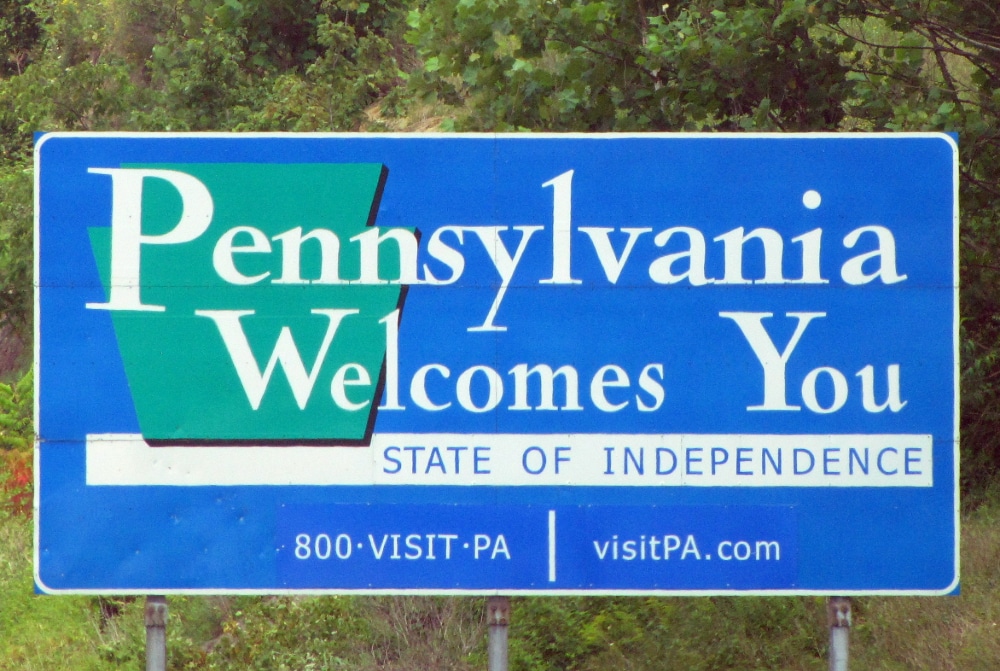
No state has gotten more hooked on gambling than Pennsylvania. Since the state legislature legalized online gambling in 2018, Pennsylvania has rocketed to the top of the list for the amount wagered online.
In March of this year, the American Gaming Association published a report that found Pennsylvania to be the largest online gambling market in the United States with a total of $3.46 billion bet in 2025, an increase of 28% over 2024.
When in-person casino gambling is included, Pennsylvania drops all the way down to second place, right behind Nevada. In terms of in-person gambling, Pennsylvania is 7th in the U.S. with $1.4 billion wagered in 2025. Clearly, Pennsylvania has a gambling problem.
How bad is the problem? Let’s look at some of the statistics compiled by Pennsylvania State University’s Criminal Justice Research Center:
- Nearly three-quarters of all adults in Pennsylvania gambled in 2025
- Nearly one-quarter of all adults gambled online
- Nearly three-quarters of Pennsylvania online gamblers were men
- As many as 6.4% of adults in Pennsylvania have a gambling problem
Pennsylvania has over 10 million adults. That means hundreds of thousands of mostly young, male adults in Pennsylvania have a gambling problem. How’s that working out for you, Pennsylvania?
Not too well, according to a deep dive in The Philadelphia Inquirer. “That’s an inordinate amount of people,” Eric Webber told the Inquirer. Webber is a senior behavioral health therapist at Pennsylvania’s Caron Treatment Centers, which provides addiction recovery services.
The rate of gambling addiction in Pennsylvania is roughly double the rate of the U.S. average. “I tell people this is the new epidemic,” Webber told the Inquirer, “and [Pennsylvania] is at the epicenter of it.”
Very few people who have been bankrupted by online gambling and prediction markets are willing to come forward and admit their losses. The Inquirer profiles one gambler, Reynaldo Rivera, who is suing the online gambling syndicates after losing $137,000 in five years. The online casinos showered him with benefits to keep him losing, including throwing out the opening pitch at a Philadelphia Phillies home game.
The Inquirer spoke with Jennifer Hoekstra, the attorney representing Rivera, who said that “FanDuel and DraftKings […] built an addictive product intentionally.” Hoekstra’s firm now has over 15,000 victims of online gambling addiction signed on to a lawsuit claiming the syndicates use “hyper-personalized algorithms” to target problem users and turn them into gambling addicts. “FanDuel and DraftKings have created, essentially, an addiction crisis,” Hoekstra told the Inquirer.
The gambling syndicates and prediction markets are accused of using artificial intelligence (AI) to target and groom problem gamblers. Rivera received personal text messages from members of VIP teams encouraging him to use their apps. Another problem gambler was sent a personalized video from FanDuel featuring Phillies star, Bryce Harper, according to the Inquirer. The victim had planned to terminate his life after gambling away his family’s life savings.
Gambling reform efforts, such as the SAFE Bet Act, which is stalled in Congress, seek to curtail VIP programs that prey on problem gamblers and eliminate microbets during a game. As you can imagine, the gambling syndicates are vehemently opposed to these changes and have formed a trade group to fight against the restrictions.
In an earlier post on AddictionNews, we revealed how gambling syndicates are piling money into the U.S. midterm elections in hopes of softening the blow no matter which side wins. Among the issues expected to go to the Supreme Court this year is whether states have the right to regulate prediction markets, such as Kalshi and Polymarket.
Complicating the efforts to get a clear picture of the toll online gambling is taking on America, the gambling syndicates have taken over the gambling recovery industry and, therefore, generate most of the statistics about problem gambling. Today, the gambling industry pretty much controls gambling research, gambling statistics, gambling recovery, and gambling media. Through the generous sums they advance to state governments, they also appear to control the agencies charged with monitoring them.
Much like AI itself, we have a limited amount of time to take control of online gambling before it metastasizes into something that does enormous damage for generations to come.
Written by Steve O’Keefe. First published October 13, 2026.
Sources:
“Gambling’s Ground Zero,” The Philadelphia Inquirer, October 8, 2026.
Image courtesy of Wikimedia Commons.