Opioid Addiction and Senior Citizens

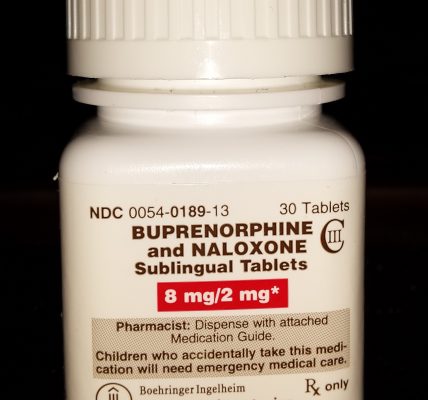
There are roughly one million people over the age of 65 in the U.S. who suffer from opioid use disorder (OUD). In a majority of cases, the addiction originated with — or resurfaced due to — prescription painkillers.
Less than 20% of seniors with OUD are currently receiving medication-assisted treatment (MAT), despite treatment now being covered by Medicare. In 2023, nearly 20,000 people over the age of 55 died from an opioid overdose. This is despite recent declines in overdose death rates.
One reason seniors with OUD die in such high numbers is the lack of anyone with them at the time of overdose. If they live alone, as many do, there is no one present to administer lifesaving naloxone, which can stop an overdose in its tracks.
The widespread distribution of naloxone (Narcan) and training in administering the drug are credited with saving tens of thousands of lives. However, overdose death rates for seniors remain stubbornly high.
A recent article in the nonprofit media outlet, Tradeoffs, focuses on how one addiction recovery center in Baltimore, Maryland, tries to specialize in the needs of seniors with OUD.
REACH Health Services is an interesting combination of community services and higher education. On the community service side, REACH “[W]orks to expand the use of medications for opioid use disorder and to decrease the stigma associated with medications to treat opioid use disorder in our community.”
An example of the stigma is doctors who look down on patients with OUD when, in many cases, it was doctors who caused it. There’s an increased need for simple screening, such as “Would you like help reducing your medication?” Primary care physicians should make sure that patients using opioid painkillers have Narcan at home.
On the higher education side, REACH “aims to assist in the training of the next generation of behavioral health treatment providers to create a workforce that is competently cross-educated and trained in the care and treatment of people with behavioral health disorders.” As we have reported here before, the lack of medical school training in addiction treatment is scandalous.
REACH Health Services is first and foremost an outpatient addiction treatment center near the intersection of North Avenue and Maryland Avenue in downtown Baltimore that is open Monday-Friday, 5:30 a.m. to 4:00 p.m., phone 410-752-6080. They offer medication for opioid use disorder (MOUD) in both standard and intensive treatment scenarios.
REACH helps patients in addiction treatment navigate their other healthcare needs, including dentistry and eye care. They provide some on-site healthcare services as well as referrals, appointment scheduling, and even transportation for appointments.
REACH provides mental health services for MOUD patients, including screening, psychotherapy, gambling disorder treatment, and “trauma-focused counseling” for patients trying to process traumatic experiences and “build resilience.” REACH hosts a twice-weekly peer support group for senior MOUD patients.
Some of the keys to helping seniors with OUD get the recovery they want and need are:
Better Screening: “Why are you using?” might be a better question than “How much are you using?”
Greater Empathy: If you ask, “How did you get started using?” you might see a familiar path that begins with pain.
Whole-Person Care: If you want people to stay in addiction treatment, you need to provide either housing or transportation. Very often, seniors with OUD have mobility problems. Almost all have significant health issues that require attention concurrently with MOUD. And many require assistance securing affordable housing within reach of the recovery center.
Patience: Recovery is a process, not a destination. Vickie Walters, the executive director of REACH, told Tradeoffs they have an “open door policy” that allows patients to crash out of the program and return to try again.
Not treating senior citizen opioid addiction is even more expensive than treating it. A 2023 study published in the journal Drug and Alcohol Dependence found that “Medicare spending was significantly less in treated than non-treated beneficiaries with OUD.” The researchers estimated Medicare spends over $10 billion per year as a result of untreated OUD.
When it comes to treating senior citizens with OUD, it costs more to ignore the problem than to deal with it. There is probably a good origin story for each individual in addiction treatment, and uncovering it is important to treating the underlying trauma. With time and medication, most seniors with OUD remain in recovery, to the benefit of themselves and their communities.
Written by Steve O’Keefe. First published February 25, 2026.
Sources:
“A Better Way to Care for Older Adults with Opioid Addiction,” Tradeoffs, February 12, 2026.
“The cost of opioid use disorder-related conditions in Medicare,” Drug and Alcohol Dependence, March 2023.
Image Copyright: smumcu.