San Francisco Sues 10 Food Industry Giants For Damages Caused By Ultra-Processed Foods
There was, at one time, a marketing campaign from tobacco company Philip Morris to “Smoke Responsibly.” The campaign was used as evidence that the cigarette maker knew that the secondhand effects of smoking are irritating to others. The trademark for the phrase is currently in litigation.
The idea that one can “smoke responsibly” was a public relations fiction designed to ward off impending regulation. It was adopted by the alcohol industry, which still encourages people to “drink responsibly,” a recognition of the impairment caused by its products. We can thank the legal world for laying bare these euphemisms:
[I]ndustries must put considerable effort into “preparing the ground” by influencing public and policymakers’ understanding about the problems their products cause and how and by whom these problems should be solved. This effort includes misleading the public about industry’s role in causing the problems…
Last week we wrote about the phrase, “gamble responsibly,” adopted perhaps too quickly by large gambling syndicates that fail to recognize it as an admission of guilt: The gambling habit quickly becomes irresponsible. Where’s the line?
The gambling syndicates would like to control the point at which their customers have crossed the line. Is it irresponsible for gambling syndicates to push more than 15% of their customers into bankruptcy to cover ridiculous bets on unlikely outcomes?
Is it irresponsible to take $1,100 out of household savings every year to pay for gambling losses? That’s the amount researchers say is the average for families that gamble. That means the average customer of gambling syndicates engages in arguably irresponsible behavior. How are they allowed to solicit customers at all?
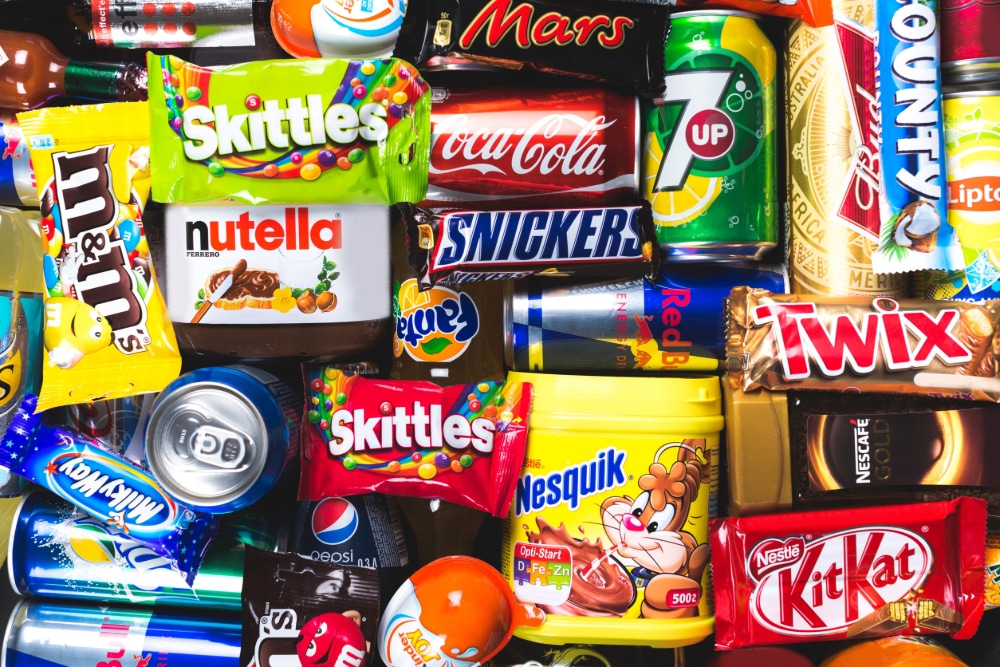
On the heels of school districts suing social media companies for the added expenses incurred teaching children whose brains have been intentionally scrambled by social media companies, now the City of San Francisco is suing 10 ultra-processed food (UPF) manufacturers for restitution of costs incurred to treat the “astronomical health care costs” the city bears as a result of UPF consumption.
“Eat Responsibly”
To date, the phrase “eat responsibly” has been employed primarily to encourage people to think of the environmental consequences of their eating habits. In some cases, it is used nutritionally, encouraging people to be thoughtful about the food they are eating and what it might be doing to them physically and mentally. Perhaps this is why the food industry has not yet taken control of the term to set the bar at which point consumption of UPFs become unhealthy.
In the first lawsuit of its kind, the City of San Francisco argues 10 UPF makers “designed, manufactured, marketed, and sold these foods knowing they were dangerous for human consumption.” The city accuses the companies of engineering a public health crisis from which “they profited handsomely.” The 10 companies are:
- Kraft Heinz Company
- Mondelez International
- Post Holdings
- The Coca-Cola Company
- PepsiCo, General Mills
- Nestle USA
- Kellogg
- Mars Incorporated
- ConAgra Brands
The lawsuit accuses the companies of using a variety of techniques and ingredients to “stimulate cravings and encourage overconsumption.” The lawsuit comes on the heels of a bombshell editorial in The Lancet calling out the UPF industry. Based on research by the EAT-Lancet Commission, it concludes:
The UPF industry is emblematic of a food system that is increasingly controlled by transnational corporations that prioritise corporate profit ahead of public health.
Ouch! The food industry has always relied on the exemption that eating food is necessary to sustain life. One cannot outlaw eating food, only eating “irresponsibly.” Gluttony has been illegal from time to time.
The food industry, like the alcohol industry, the cannabis industry, and the tobacco industry, tries to encourage the “responsible use” of their products. “What they all are really saying,” translates Dr. Robert Pretlow, publisher of AddictionNews, “is, ‘Don’t use X behavior as displacement activity.'”
Displacement activity is the need to displace the overflow of stress-induced energy into some activity, which can quickly become an activity of abuse. Stressful energy can be displaced with the consumption of dopamine-inducing substances and behaviors. All the companies that sell potentially self-destructive products want their biggest customers to tamp it down a little so they don’t get sued.
Why do people engage in self-destructive behaviors? Is it due to the pull of substances of abuse? Why does such a small percentage of those who use substances of abuse become dependent upon them? Why don’t they grab hold of everyone? There is a slight genetic link to addiction: You are more likely to become a substance abuser if your parents were substance abusers. But the majority of people whose parents were substance abusers do not follow in their parents’ footsteps.
A better understanding of how the mechanism of displacement underlies both substance use disorders and behavioral disorders might yield a better strategy than “eat, drink, play responsibly.” The fact that all these disorders can be treated with cognitive behavioral therapy, including stress management techniques, indicates a common bond that is independent of the particular substance or behavior of abuse.
Written by Steve O’Keefe. First published February 24, 2026.
Sources:
“Pills and the damage done: the opioid epidemic as man-made crisis,” Frontiers in Public Health, January 11, 2024.
“The Role of Commercial Influences in Public Understanding of Harms, Causes, and Solutions” is a chapter in the book, The Commercial Determinants of Health, published by Oxford University Press, 2023.
Eating 2.0: How to Eat Confidently in an Ultra Processed World, by Jeff Seigel, published by JES Wellness, 2025.
“Health, Nutrition and Social Responsibility,” Hotel Restaurant & Hi-Tech Journal, July 2025.
“US City Sues Ultra-Processed Food Companies, Seeking ‘Restitution’ for Health Costs,” Health Policy Watch, May 12, 2025.
“The EAT–Lancet Commission on healthy, sustainable, and just food systems,” The Lancet, October 11, 2025.
Image Copyright: olegdudko.