
Nature-Based Therapies Improve Addiction Treatment Outcomes
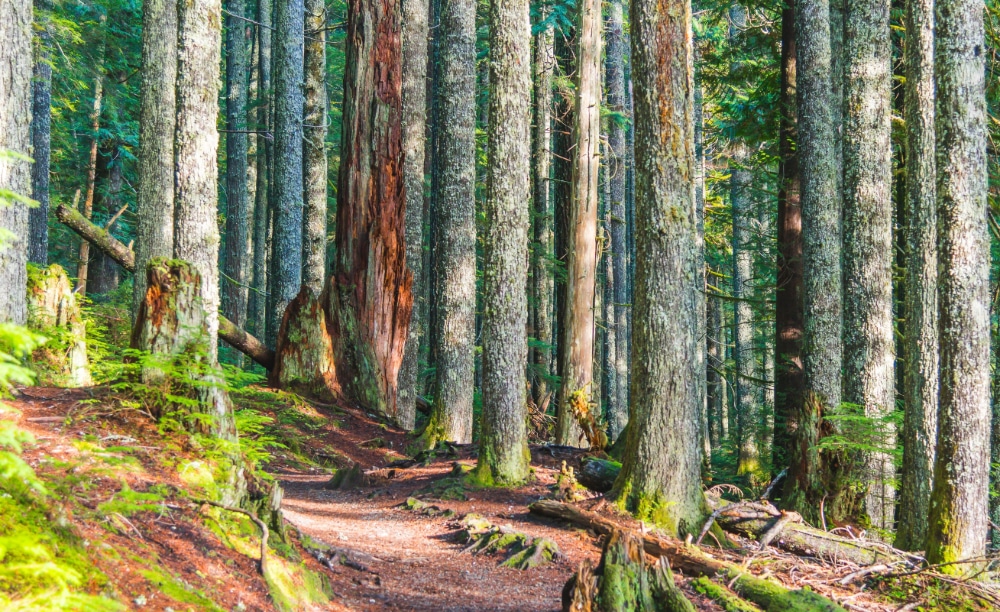
People working in addiction treatment have long known that taking people out of their normal operating environment and housing them at a camp in the woods for a couple of weeks or a couple of months does wonders for their ability to withstand withdrawal.
The camp setting works in part because it detaches the patient from triggers and cues built up over years: patterns of living that include family, work, friends, commuting, and routine obligations. Using medication-assisted therapy, it is relatively easy to break the bonds of physical addictions in a matter of weeks.
However, what happens when the patient returns to the real world of work, family, and friends? A new study indicates that the benefits of being in nature continue to be a remedy even without isolating at a camp in the woods.
The study teased out the impact of time spent in nature on mental health using data collected by the Body Image in Nature Survey (BINS) involving over 50,000 participants from 58 different nations. The survey found surprising unanimity in the beneficial results of time spent in nature across countries, genders, and ages. In particular, they found these benefits:
- greater self-compassion
- greater perceived restoration
- improved body image
- greater life satisfaction
The researchers point out that “cognitive quiet” is more easily achieved in natural settings, allowing patients to “eliminate cognitive clutter” and “experience compassionate self-responding.” This compassionate self-responding is “robustly” associated with greater body appreciation. It does this, according to researchers, “possibly by reducing negative thinking and emotions or enhancing emotional regulation skills.”
The researchers cite the Attention Restoration Theory of Kaplan, et. al., which says that urban environments “can result in mental fatigue, failure to maintain goal-directed behaviour, and impaired self-regulation.” The researchers summarize one explanation for the benefits of nature-based therapies:
[N]atural environments are able to support recovery from states of cognitive depletion (i.e., attention restoration), precisely because they contain stimuli that capture attention effortlessly and thereby stimulate involuntary attention, allow directed attention to rest, aid the ability to adopt mindful states, and ultimately achieve cognitive restoration and optimal self-regulation.
That’s impressive! The research matches up well with other studies we’ve covered on habit substitution, where patients purposefully substitute beneficial habits for their previously compulsive behaviors. A daily walk in nature, instead of a daily happy hour, does wonders for one’s body image, which in turn improves life satisfaction.
The researchers found that repetition was one of the keys to deriving the benefits of natural connection. “Restorative experiences may also promote improved everyday coping, particularly when contact with nature occurs repetitively.” The researchers also found that people with mindfulness training found it easier to achieve mindfulness in natural settings.
Other studies have corroborated some aspects of the BINS research. A review in the Irish Journal of Occupational Therapy found some benefits from nature-based therapies, but the diversity of experiences made comparisons impossible. Exactly what qualifies as nature-based therapy is all over the place.
Danish researchers conducted a randomized, controlled trial of nature-based therapies for individuals with stress-related illnesses. The study involved 84 patients randomly assigned to Nacadia NBT, a nature-based therapy, or cognitive behavioral therapy that goes by the name of STreSS, for Specialised Treatment for Severe Bodily Distress Syndromes.
To be eligible, patients had to be found “incapable of working” with their primary diagnosis being either a psychiatric disorder or a stress disorder severe enough to result in 3-24 months of inability to work. The trial lasted 10 weeks, with a follow-up at 12 months.
STreSS therapy is considered the standard of care in Denmark. It involves one-hour individual sessions with a therapist five days a week.
The Nacadia therapy involved three-hour sessions three days each week in a wild forest garden with “individual therapeutic conversation and individual nature-based activities introduced by the gardener.” It is interesting that they tried to limit interaction with others and limit talking during the Nacadia treatment. Other studies have shown that the mental health benefits of nature-based therapies are reduced in group outings.
Outcomes were measured using the Psychological General Well-Being Index and the Shirom-Melamed Burnout Questionnaire. And the results show no statistical difference between the Nacadia therapy and the STreSS therapy. These results held up 12 months later. That might not sound like much, but for 90 hours in nature to yield the same psychological impact as 10 weeks of one-on-one work with a therapist is profound.
Science has spoken: For your own mental health, find a way to structure regular time alone or with silent friends in natural settings. In particular, you can use this regimen as part of a recovery plan for any compulsive use problems you might have. Including time in nature on a regular basis will help you exclude thoughts such as negative body image that drive unhappiness and reduce life satisfaction.
Written by Steve O’Keefe. First published June 15, 2026.
Sources:
“Positive body image is a pathway between nature contact and life satisfaction across 58 nations,” Environment International, June 2026.
“The surprising science-backed reason being in nature makes you feel good,” The Washington Post, June 5, 2026.
“The benefits of nature-based therapy for the individual and the environment: an integrative review,” Irish Journal of Occupational Therapy, March 31, 2022.
“Efficacy of nature-based therapy for individuals with stress-related illnesses: randomised controlled trial,” The British Journal of Psychiatry, May 25, 2018.
Image Copyright: checubus.