
Introducing the Addiction Science Defense Network
In February, 2025, a group of addiction researchers and addiction medicine practitioners formed an alliance designed to defend their work, which has been under attack since the January 2025 inauguration of Donald J. Trump as President of the United States, for the second time.
We have documented the attacks on addiction research here at AddictionNews:
- The suspension of previously approved addiction research grants.
- The defunding the Substance Abuse and Mental Health Services Administration (SAMHSA).
- The censorship of research publications.
The destruction of the fragile infrastructure for preventing overdoses, treating people with addiction, and researching better addiction solutions was torn asunder. As a result, hundreds of addiction specialists banded together to form the Addiction Science Defense Network (ASDN). Their stated goals include:
- An initial statement of concern.
- A weekly newsletter monitoring addiction science and policy.
- Developing a strategic agenda to defend addiction science.
- Lobbying to present policymakers with ASDN perspectives.
- Editorials and op-eds supporting best practices in addiction science.
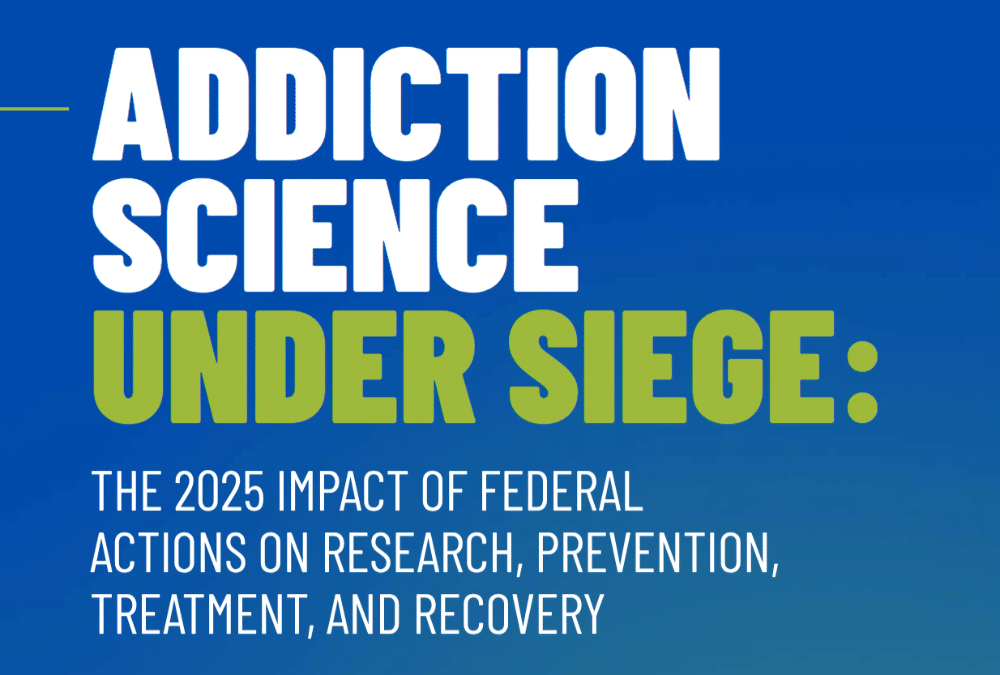
Item number one on the list, an initial statement of concern, has just been completed. It comes in the form of a special report, “Addiction Science Under Siege: The 2025 Impact of Federal Actions on Research, Prevention, Treatment, and Recovery.” It’s a rather incredible 77-page dossier on the impacts of the current attacks on addiction research, addiction treatment, and addiction science.
The conclusion is heartbreaking:
Addiction science is more than a collection of individual scientists, research centers, funding bodies, scientific journals and training programs. It is a field of study that took over 50 years to build into a living, interacting network of dedicated scientists. The precipitous changes implemented by the Trump administration during the past year threaten the viability of a network that has proven to be a cost-effective response to one of the most serious public health problems facing American society.
The report cites workforce reductions of 4,000 employees, representing 18% of the staffing at the National Institutes of Health (NIH). At the National Institute on Drug Addiction (NIDA), 45 grants totalling $24 million were terminated because they contained language associated with gender analysis.
Funding for new grants through NIDA and the National Institute on Alcohol Abuse and Alcoholism (NIAAA) is at its lowest level in more than 25 years. SAMHSA’s staffing has been reduced by nearly two-thirds. Public health monitoring has been severely disrupted:
Many of the datasets essential for epidemiological monitoring of substance use, addiction, mental health, and behavioral-health disparities were altered, removed, or frozen.
The funding cuts and policy changes are expected to lead to a degradation of services at all levels of addiction treatment. There will be less money for naloxone, less training on how to use it, and more overdoses as a result. People presenting at emergency rooms with signs of drug addiction will be turned over to police instead of being referred to a treatment program.
What are the police going to do with these addicts? Money for drug courts has dried up. Money for addiction treatment in jail is disappearing. The state has no choice but to retain the person at an average cost of $50,000/year, or dump them untreated back onto the streets. Without housing and treatment, many more will end up in the morgue.
As the problems and the costs to society mount, as unreimbursed emergency room costs increase, court costs increase, and incarceration costs increase, research into remedies is being halted. Where are the studies on GLP-1 drugs to treat opioid addiction? Where are the studies on avatar-based cognitive behavioral therapy that could cut delivery costs and increase adherence to addiction treatment programs?
Many of the things that will save lives and save the federal government money have been stopped in their tracks for foolish reasons. ASDN warns:
Without corrective action, continued erosion of the scientific, clinical, and data infrastructure will impair the nation’s ability to respond effectively to the problems resulting from addictive substances and behaviors.
In a summary of “Addiction Science Under Siege,” the publication Government Executive pointed out that dismantling the collection of data on substance abuse makes it difficult to make a case for funding that can be backed up with research. The Trump administration’s policy toward addiction appears to be, “Don’t track it, don’t treat it, don’t research it, just pray it goes away.”
ASDN is sounding the alarm that the results will be more addiction, costing society more money, ruining more lives, and resulting in more deaths. Their report, “Addiction Science Under Siege,” is an important contribution toward documenting the impacts of federal policy so that better decisions might prevail in the future.
Written by Steve O’Keefe. First published May 20, 2026.
Sources:
“Addiction Science Under Siege: The 2025 Impact of Federal Actions on Research, Prevention, Treatment, and Recovery,” Addiction Science Defense Network.
“‘This will cost lives’: Researchers slam Trump cuts to addiction programs and staffing,” Government Executive, May 11, 2026.
Image: “Addiction Science Under Siege” report cover, courtesy of the Addiction Science Defense Network.