
Can You Read This?
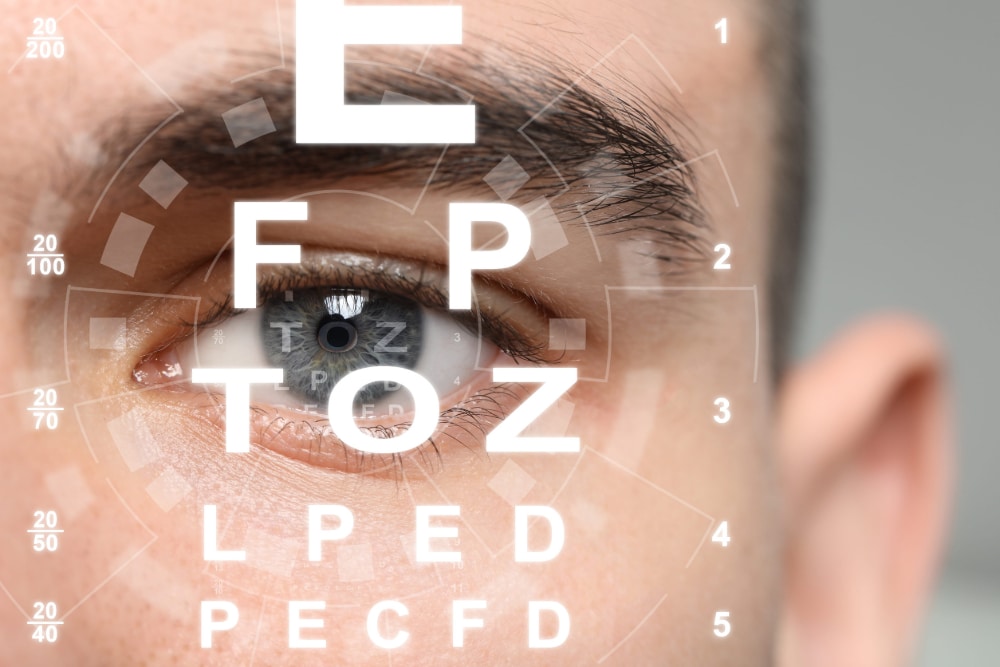
Evidence is mounting that more than half of our potential audience cannot read this. In a manner that is largely undocumented, the U.S. is becoming a nation of non-readers.
Recently, the publication Futurism reported anecdotal evidence from a college English professor that not one of his students could complete reading a 20-page paper.
Tyler Jagt teaches “Humanities 200: The Great Works” at James Madison University in Harrisonburg, Virginia. In a recently published essay in The Chronicle of Higher Education, Jagt wrote:
What I am seeing in my classroom is no longer a hunch. There is a measurable, generational collapse in sustained reading and writing, and the academy is responding to it with improvisation and exhaustion rather than the structural overhaul it requires.
If you’re still with me, it could be because you are listening to this article rather than reading it. Jagt’s students find both reading and writing “too slow.” They don’t understand why they are restricted from using AI to speed up the process.
They can ask ChatGPT to read the book and provide a summary they can quickly follow. If you look at the format of news articles on Axios, you’ll get a good idea of how AI is designing text delivery to make it more readable.
Axios uses headers such as “Why it matters?” “Zoom In,” and “Zoom Out” to keep readers on the hunt. The information provided in each section, however, seldom relates to the headers. The “zoom ins” contain no more detail and the “zoom outs” no more perspective. It’s as if an article is written, then broken up every 300 characters with a random header. It looks like an outline implying progress while the content might not move in that direction.
Axios’ editorial style is called “Smart Brevity,” and uses “brain science and machine learning to make text highly scannable.” Titles are kept to six words or fewer, like the title of this article. The algorithms take advantage of human hardwiring to quickly scan, then zoom in on particular details, eroding attention spans and destroying short-term memory in the process.
Jagt cites a series of scientific studies to back up his anecdotal claims that kids by and large can no longer read or write:
- A 2024 NEA assessment found that 12th-grade reading scores were the lowest since 1992.
- An Annie E. Casey Foundation report published in February 2026 found that 70% of fourth graders lacked proficiency in reading.
- A study published in 2024 that found the use of ChatGPT by college students resulted in students “developing tendencies” toward memory loss.
Jagt says that nearly one-third of graduating high school seniors are below the “basic” level in reading skills, meaning “they likely cannot draw general conclusions based on concepts presented explicitly in a text.”
In a recent article at AddictionNews, we profiled a researcher assessing the impact of children using chatbots. His phone-addicted patients revealed they can read words, but they can’t picture them. If they read, “the dog jumps over the fence,” they know what it means, but they don’t see the dog and they don’t see the fence.
The inability to generate mental images when reading text descriptions absolutely crushes a student’s ability to comprehend long-form texts, such as a short story. Jagt is concerned that universities are downplaying the scope of the problem due to their affiliations with technology companies.
The reduction in the ability to read, write, or understand text is widespread, with the NEA measuring declines in reading abilities in 48 out of the 50 U.S. states. We will keep watching this story at AddictionNews to see what school systems are going to do about this growing problem.
Written by Steve O’Keefe. First published June 26, 2026.
Sources:
“College Students Are Rapidly Losing the Ability to Read,” Futurism, June 10, 2026.
“My Students Can’t Read,” The Chronicle of Higher Education, June 1, 2026.
“Continued Decline in Fourth Grade Reading Scores: 7 in 10 Below Proficient in 2024,” Annie E. Casey Foundation, February 8, 2026.
“70% of fourth-graders aren’t reading proficiently, report finds — one of several areas where education is failing America’s kids,” Fortune, June 8, 2026.
Image Copyright: liudmilachernetska.