
Building a Better Mouse-Free Trap
Hanna Pickard is the Bloomberg Distinguished Professor of Philosophy and Bioethics at Johns Hopkins University and the author of the new book with a provocative title: What Would You Do Alone in a Cage with Nothing but Cocaine?
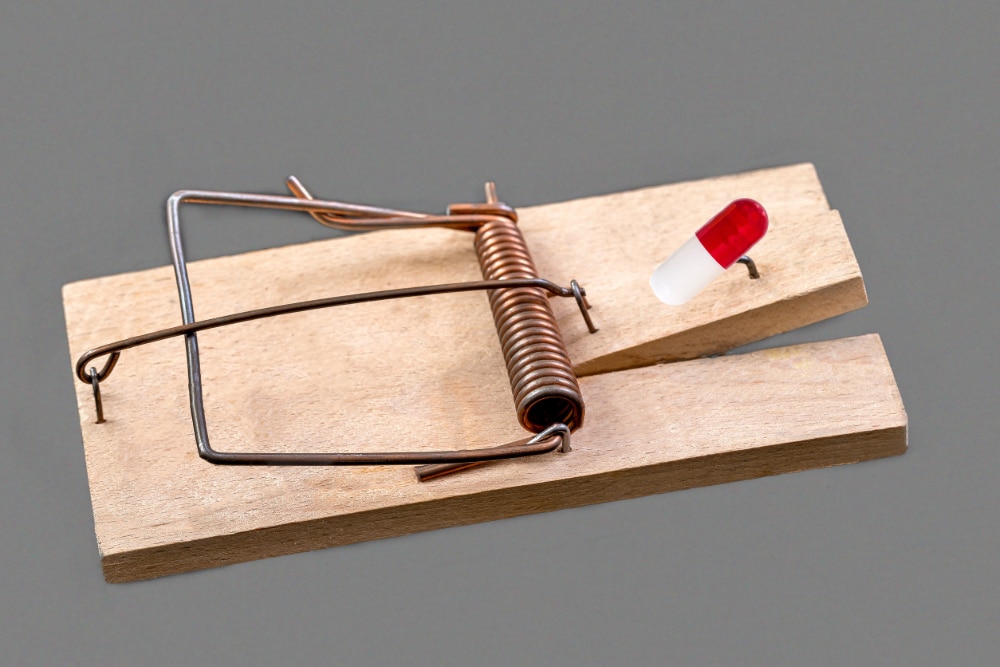
The title alone carries a lot of weight. It refers to an experiment with lab rats, and immediately calls into question the excess of animal testing in search of a magic pill that cures drug addiction. It also begs the question of whether isolation and boredom are the cause or effect of cocaine addiction.
There’s an excerpt from Pickard’s book in Popular Science. It begins with a quip attributed to Keith Richards of The Rolling Stones, who said the only drug problem he had was with the police. Pickard starts her book with the fact that some people like being stoned; they feel it enhances them, and they are therefore not technically addicted since they do not wish to stop using.
Pickard points to the difference between addiction and dependence. Dependence is, she writes, “a physiological condition defined by the occurrence of a physical withdrawal syndrome upon sudden abstinence or dose reduction. […] But physical dependence is neither necessary nor sufficient for addiction.”
The sudden abstinence of many medications will cause patients to go into withdrawal, Pickard notes, including antidepressants. She writes that the sudden withdrawal of opioid painkillers from prescription patients is “pushing people toward sourcing opioids on the streets.” Pickard writes:
[A] patient who is physically dependent on opioids is not thereby addicted. In the context of debilitating pain, a stable opioid prescription can make it possible to function — to work, to sleep, to have the capacity to be present and engaged in relationships with others, to live a fulfilling life.
Hanna Pickard was interviewed recently by Chandler Dandridge, a psychotherapist, author and educator, for the publication Jacobin. Pickard’s prescription for understanding addiction is both “humanistic and imaginative.” She proposes a new way of looking at addiction as neither scientific (studies with rats) or hedonistic (blame the victim), but “responsibility without blame,” which does not condemn responsible use.
Looking at human beings who are addicted for solutions to the addiction problem is the humanistic side of Pickard’s message. The reasons for addiction are in their social conditions. Change those conditions, for example, through contingency management, and just like rats offered rewards other than cocaine, people will gladly limit their use or abstain completely.
The other half of Pickard’s equation, imagination, is necessary not only to understand the lives of persons with substance use disorders, but to imagine solutions. More specifically, to get patients to imagine solutions that don’t involve substance abuse. So-called motivational interviewing, where people in recovery spend time sketching a future for themselves without substance abuse, has proven to be an effective therapy.
Pickard told Jacobin:
[Life] experienced as valuable and as having meaning, purpose, and a sense of possibility is both protective against addiction and often crucial to recovery.
In over a decade of work at an addiction recovery facility in the U.K., Pickard learned the importance of patients taking responsibility by making written contracts with staff for self-improvement. She felt those contracts were more important in patient recovery than medication. She tells Jacobin:
[We] really did see people get better. Their lives improved, as did their sense of self. But the mechanisms underpinning these changes had nothing to do with medication or standard medical interventions. Fundamentally, the mechanisms involved the care, support, respect, and relationships that came from belonging to the group.
Pickard believes her responsibility-without-blame approach can help therapists “develop their ability to work and relate effectively with people with personality disorders and complex needs.” She has created an e-learning module for anyone interested in learning more about the responsibility without blame approach to addiction recovery.
Written by Steve O’Keefe. First published January 13, 2026.
Sources:
“Addiction is puzzling. Scientists are trying to understand why.” Popular Science, January 3, 2026.
“We’re Thinking About Addiction Entirely Wrong: An Interview with Hanna Pickard,” Jacobin, January 6, 2026.
Image Copyright: chassenet.