Bill Gates Sounds the Alarm on AI Addiction
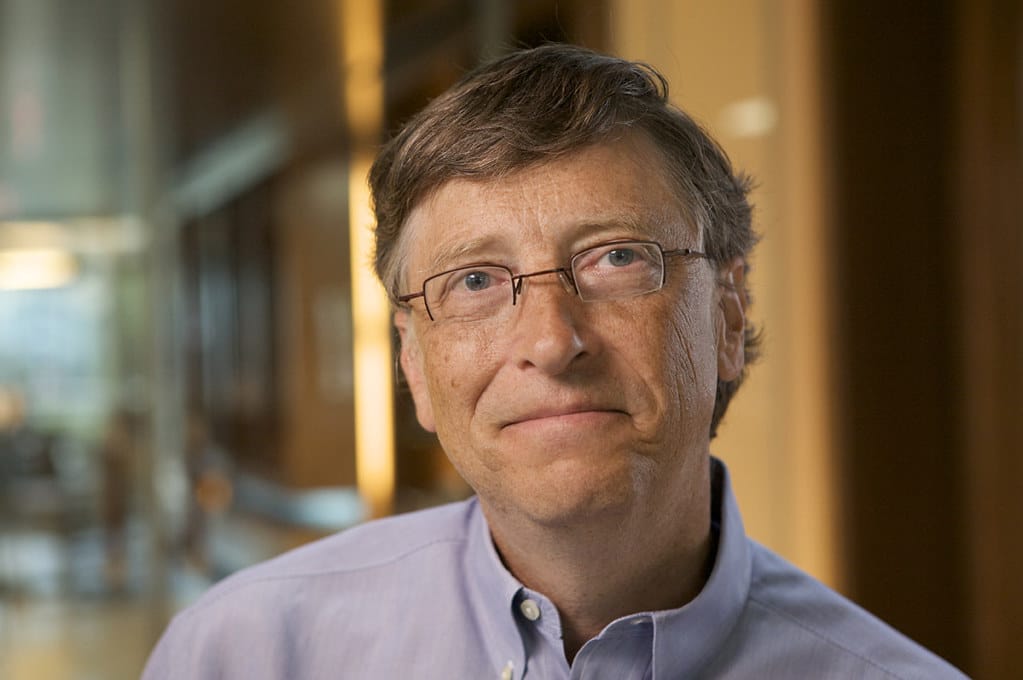
It will be hard for Silicon Valley tech titans to deny their technology is addictive when the co-founder of Microsoft and one of the fathers of artificial intelligence (AI), Bill Gates, published a lengthy essay on his website on August 25, including the statement that AI chatbots have “the potential to become highly addictive.”
AI chatbots are designed in a way that makes them “addictive,” particularly to youth who lack social skills and find the chatbots easier to deal with. Gates explains the problem:
They talk to you in ways you’re already comfortable with. They don’t push you outside your comfort zone. They are always available and never get mad at you.
Gates cites research from Carnegie Mellon University that “those with smaller social networks were the most likely to turn to a chatbot for companionship. And the heavier and more emotionally personal that use became, the worse they felt.”
“We’re seeing compulsive use, disrupted sleep, cyberbullying, and exposure to harmful content,” Gates writes, conflating two distinctly different repercussions of AI technology, the first being compulsive usage and the second being vulnerability to bad actors.
What Gates never comes out and says directly is that the profit motive will lead companies such as Microsoft into exploiting addictive AI technology to hang onto customers. Can you imagine an intimate companion you have relied upon for years threatening to reveal your conversations if you don’t maintain your subscription?
Gates points out repeatedly that the opportunity to tether AI to a firm set of rules is quickly eroding. In the next decade, he foresees that children will adopt AI companions and homework helpers that will render them less intelligent and more dependent upon their devices. “One preliminary survey suggested that heavier AI use was associated with less critical thinking. The effect was stronger for younger people,” Gates writes.
When these children graduate high school, they will face an employment landscape we can barely imagine, including:
- Dramatically fewer entry-level jobs in almost every profession.
- Dramatically fewer manual labor jobs.
- High demand for highly specialized fields requiring advanced degrees.
- No employment advantage for jobseekers holding a bachelor’s degree.
“This would be the worst possible time for humans to lose their critical thinking skills,” Gates writes. He does not mention the mental health impacts of a generation of high school graduates facing this employment scenario, though he hints at it:
When a community has high unemployment, the ripple effects can be pervasive. Research suggests that in some parts of the United States, factory closures contribute to a rise in deaths from opioid overdoses. Now imagine similar pressures on both white-collar and blue-collar workers nationwide.
Gates writes that AI, “with the right privacy safeguards in place,” can provide some of the services currently provided by “counselors, psychiatrists and addiction specialists.” The chatbot could then “offer evidence-based coping strategies and team up with a human to provide more responsive treatment.”
The upside of zero employment is everything will cost less. “Taken together, the advances in all these areas could make everyday life easier, more affordable, and less constrained by a person’s income or connections.” People will have “greater freedom to focus on the lives they want to build,” Gates writes, even if they will lack the resources needed to actually build them.
But don’t worry — people will have AI companions to soothe them and remind them that everything is going to be alright, they are on the best possible route, and they will reach their destination shortly.
Written by Steve O’Keefe. First published September 4, 2026.
Sources:
“The turbulent AI era is here. The choices we make now are critical.” Bill Gates, August 26, 2025.
“Bill Gates Warns A.I. Is More Dangerous Than Big Tech Will Admit,” The New York Times, August 26, 2026.
Image of Bill Gates courtesy of OnInnovation, used under a Creative Commons license.