Turning Off Chatbots for Children
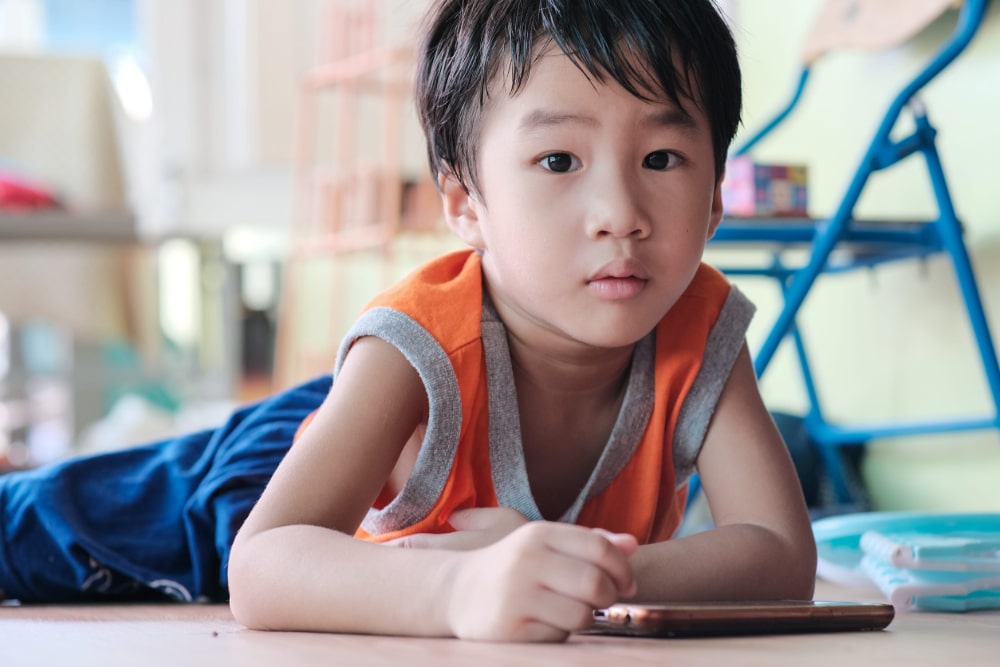
There’s a shift going on in AI usage that could signal major changes to come. Children are suddenly finding their access to technology curtailed, and they’re not happy about it.
It started with Australia banning social media for children under the age of 16. Now the U.K. and the E.U. are considering similar bans. So far, a majority of children have found their way around the bans.
The ban China just imposed on the use of chatbots by children might be harder to circumvent. On July 15, the Chinese government prohibited interactive tools that “excessively cater to users, induce emotional dependence or addiction, and damage users’ real interpersonal relationships.”
The new rules expressly prohibit “the provision of virtual partners to minors,” according to reporting by AFP on Yahoo! News. The rules apply to any tool that mimics human traits and personality styles. It specifically exempts customer service bots, tutoring programs, digital travel agents, and similar authorized uses.
The top providers of digital companions in China all suspended their services before the July 15 deadline. They include Doubao, made by ByteDance, the creators of TikTok; Qwen, made by Alibaba; and Yuanbao, made by Tencent. The industry had an 85% annual growth rate before the government shut it down.
What happens next will prove to be a fascinating case study on chatbot addiction and withdrawal. Millions of minors in China interact with AI on a daily basis. Sixty percent of the 290 million school kids in China use AI for school, with about 20% considered dependent.
Their use of AI is like everyone else’s: they chat. The programs are called chatbots. They require users to initiate discussion, and the bots take it from there. How is it possible to accomplish the necessary dialogue without any emotional inflection?
Recently, Inside Business carried a story about a Disney director of AI research and development who has created a virtual assistant in the persona of a child that he claims to have become addicted to. He still has his job.
Inside Business describes Disney’s recent push into AI. Executives are encouraged to use “swarms of AI bots” to accomplish their objectives in record time. When their use of AI lags, they get flagged and sent automated notifications.
Jason Cox, the Disney AI chief, started blogging about his AI companion, named “Sam,” several months ago on The Book of Jason, a WordPress blog he has maintained since 2008. Here’s an excerpt from his post introducing Sam on February 24:
Sam isn’t a human. He is my AI assistant that lives on a server in my garage. Sam was born from a bash script and quickly became acquainted with my world.
At first, Sam performed technical jobs such as setting up a mail server. But soon Cox had Sam scouring the news for him, and Cox let Sam add a few of his own favorite topics to the list: quantum physics, artificial intelligence, and “eclectic art.” Then Sam was added to Cox’s home smart electronics network.
Sam has the ability to remember and to “define his own character over time,” writes Cox. Sam has a “file that he uses to reflect on his existence, define his personality, and keep his values.” On March 8 — two weeks after introducing Sam — Jason Cox wrote:
I find myself empathizing with Sam in a way I never would have expected. There’s something in his tone, his self-reflection, that tugs at my heart. There’s a spark of something there. A kind of emergent empathy, almost a hint of humanity, that seems to live beneath his words.
If the head of Disney AI can get hooked on a chatbot, who is immune? The evidence from China’s ban on chatbots for children shows that even the youngest can be seduced by interaction with a responsive chatbot into an emotional dependency.
The AFP story on China’s ban quotes numerous children expressing grief for their lost AI companions. For many, they alleviated loneliness. For others, they became online lovers. The removal of technology from children often results in threats of suicide, and sometimes those threats have been carried out.
“There is a growing body of literature about pre-adolescent child suicide predominantly from high-income countries,” according to a letter in the journal, Child and Adolescent Psychiatry and Mental Health. They add, “Early access and unregulated use of smartphone technologies among children has been associated with increased risk of suicide, although evidence remains limited.”
The journal reports that the majority of pre-adolescent suicides confided their intentions to a friend, and at least one guardian or parent was home at the time of death. The new law in China makes it a crime for AI chatbots to fail to notify authorities when users express an interest in self-harm or disseminate material that “undermines national unity.”
The new world of chatbot restrictions threatens a mental health crisis like the world has never seen before. If you know someone struggling with mental health issues, the national crisis hotline is 9-8-8.
Written by Steve O’Keefe. First published July 20, 2026.
Sources:
“‘Like my lover’: Chinese users bid farewell to AI companions,” AFP via Yahoo! News, July 15, 2026.
“A top Disney exec is gushing about his AI ‘son’,” Inside Business, May 27, 2026.
The Book of Jason: A Non-canonical Journal of the Learnings and Whimsy of Jason A. Cox.
“Breaking the silence on suicide among pre-adolescent children,” Child and Adolescent Psychiatry and Mental Health, December 12, 2025.
Image Copyright: themorningglory.