
The Connection Between Appetite and Addiction
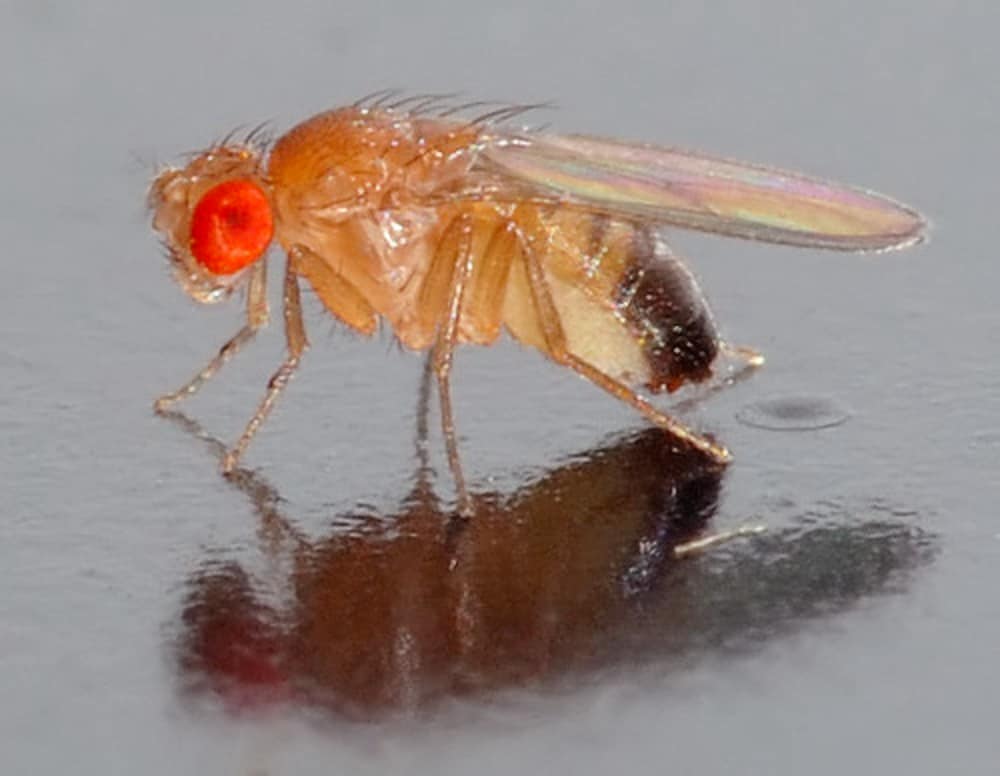
In making the case for A Unified Theory of Addiction, researchers at Brown University have just released a study on the connection between appetite and addiction.
The study with fruit flies comes from the Carney Institute for Brain Science in Providence, Rhode Island. It was published in the journal, Current Biology. Here’s the interesting path the researchers took from appetite to addiction.
First, they tracked how adverse biological states such as hunger, thirst, and pain changed the way that memories were stored and processed. The fruit flies engaged in ethanol- seeking behavior when they were food-deprived. Here is the technical explanation from the journal article:
We identified a single octopamine neuron required for ethanol seeking only when [fruit flies] are food deprived. Hunger increased baseline activity in this neuron, thus making it more responsive to an odor cue previously paired with ethanol.
Alice Popovici, a contributing writer for the Carney Institute for Brain Science, describes octopamine as “a fight-or-flight neurotransmitter equivalent to human norepinephrine.” She writes, “Previous studies by scientists in Kaun’s lab have helped to uncover the role of memory formation underlying addiction — how memories of alcohol as a reward can drive cravings.”
In fruit flies, appetite activates a neuron that tells the fruit fly to look for ethanol. Hunger activates this learned memory to search for alcohol. The study does not say whether the fruit flies place the search for ethanol above the search for food. Hunger increases the “expression of memory for ethanol-associated cues.”
There is “a parallel ethanol memory circuit motif that is only active upon food deprivation to drive ethanol seeking.” Hunger stimulates the memory “about cues previously associated with ethanol intoxication.”
While the researchers did not explicitly test this thesis, they believe the connection they discovered between appetite and alcohol addiction also likely relates to other forms of addiction. They believe that stress and pain can stimulate memories of substance abuse. In their own words:
Our study provides a circuit motif that directly links internal state modulation to memory processing, as well as an understanding of the impact these state-dependent circuits have in mediating drug use, addiction, cravings, and relapse.
We are only talking about fruit flies here, but the researchers are quite impressed with the potential for what they have discovered. The fact that hunger can activate a memory switch of intoxication helps animals adapt to their environment, researchers say. It illustrates how the nervous system integrates nutritional needs into memory circuits, “providing a potential mechanism by which stress-arousal systems affect memory processing and retrieval mechanisms across other systems.”
The connection between stress, memory, and addiction mapped out in fruit flies may lead to new treatment paths for human beings.
Written by Steve O’Keefe. First published October 30, 2026.
Sources:
“Hunger may play a role in alcohol addiction, new study finds,” News from Brown University, October 19, 2026.
“Hunger recruits a parallel circuit encoding alcohol reward,” Current Biology, October 19, 2026.
Image Copyright: The Image Editor on Flickr, used under Creative Commons license.


