
The Complicated Relationship Between Addiction and Music
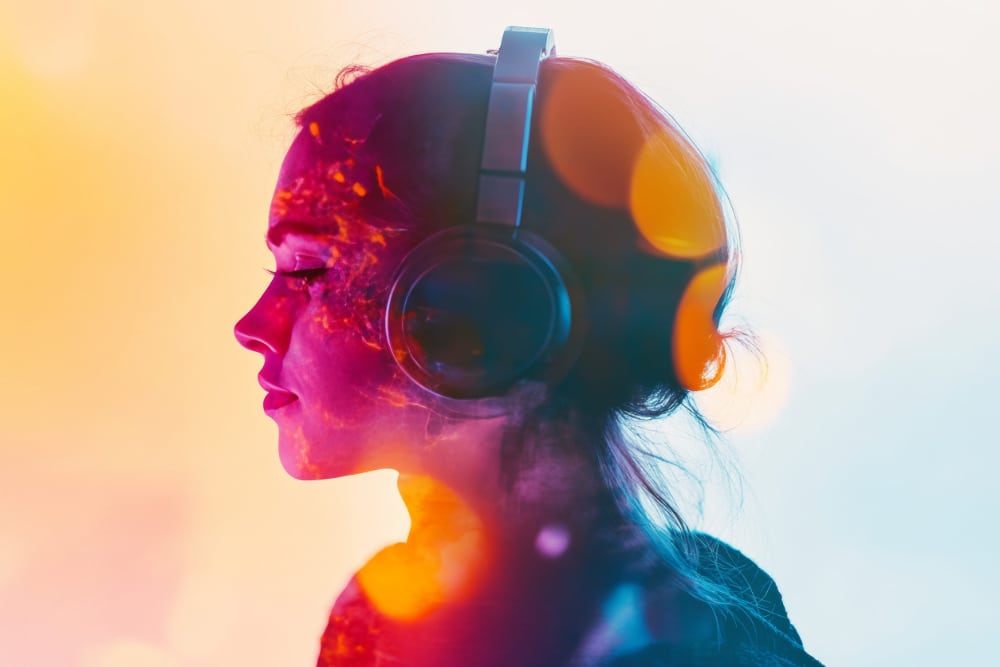
“My relationship to rock [music] has been akin to a junkie and the drug to which they are addicted.” Those are the closing lines of the preface to Addicted to Noise, a collection of essays by former Rolling Stone music critic, Michael Goldberg.
Some people, especially young persons new to the delights of popular music, can become absorbed in it to a degree that is potentially dangerous. A pair of researchers at Ghent University in Belgium explain the relationship between the effects of music and “psychoactive substances” in an article published in the scientific journal, Musicae Scientiae.
The Belgian researchers slowly make their way through the scientific literature regarding the neural pathways of sound, pleasure, and psychoactive drugs. Their conclusion:
[M]usic may be regarded as an alternative psychoactive trigger, prompting neurochemical responses in the brain, with resulting feelings of coping, (aesthetic) pleasure, and reward.
Both substance use disorders (SUDs) and an addiction to music involve intense anticipation or cravings, environmental cues and triggers, usage rituals, and feelings of coming down or crashing after an intense experience. The withdrawal symptoms from music addiction, however, are much less severe than the physical pains incurred when terminating an SUD.
The researchers show that pleasant or familiar music causes dopaminergic activity in the brain’s reward centers, “linking dopamine release with musical pleasure.” The researchers point out that the pleasure from listening to music is short-lasting. However, they do not point out that each rehearing of a favorite piece of music has a compounding impact similar to the “hijacking” of the brain’s reward system from repeated drug use. Only a few notes from a favorite song are enough to trigger a rush of recognition and a cascade of memories and feelings.
The fact that hearing music can be so emotionally powerful means it can also be a trigger for people trying to recover from SUDs. This possibility is the subject of a fascinating paper by Dr. Michael Silverman, Director of Music Therapy at the University of Minnesota. Dr. Silverman and his team conducted a systematic review of the scientific literature on music-induced substance craving.
As you might imagine, assessing the contribution of music to cravings for substance abuse is not a simple thing to measure. Musical taste is highly personal, and the lack of uniformity in the methods used makes it difficult to integrate results from different studies. Still, the researchers found enough evidence to come to the rather bland conclusion:
[V]arious types of music can induce alcohol, cannabis, nicotine, and general substance craving.
A study conducted with 15 formerly-incarcerated individuals found that certain personal music “triggers memories of past substance use and stimulates cravings.” However, when participants were allowed to exclude such pieces of music, they found that:
- Music can be used as a way to recruit inner resources related to the ability of music to provide strength and hope, and the ability of imagination to alleviate loneliness.
- Music can be used as a vehicle for beneficial interpersonal relationships related to group support and feelings of being understood.
The research indicates that music can be a very powerful tool, either in stimulating cravings or in soothing them, depending on how it is used. Music travels through many of the same reward pathways as substances of abuse, and can be used to calm those channels or excite them.
At the end of their lengthy review, the Belgian researchers conclude with their hopes that “music listening can provide a less invasive and less harmful alternative [to substance abuse] for listeners in search of peak experiences and altered states of consciousness.”
Written by Steve O’Keefe. First published March 9, 2026.
Sources:
“Is music a drug? How music listening may trigger neurochemical responses in the brain,” Musicae Scientae, March 18, 2024.
“A systematic review of music-induced substance craving,” Musicae Scientae, August 13, 2021.
“Beneficial and harmful music for substance use disorder clients: Implementation of the musical presentation technique,” The Arts in Psychotherapy, February 2024.
Image Copyright: mikkiorso.