
Managing Stress With Birdsong
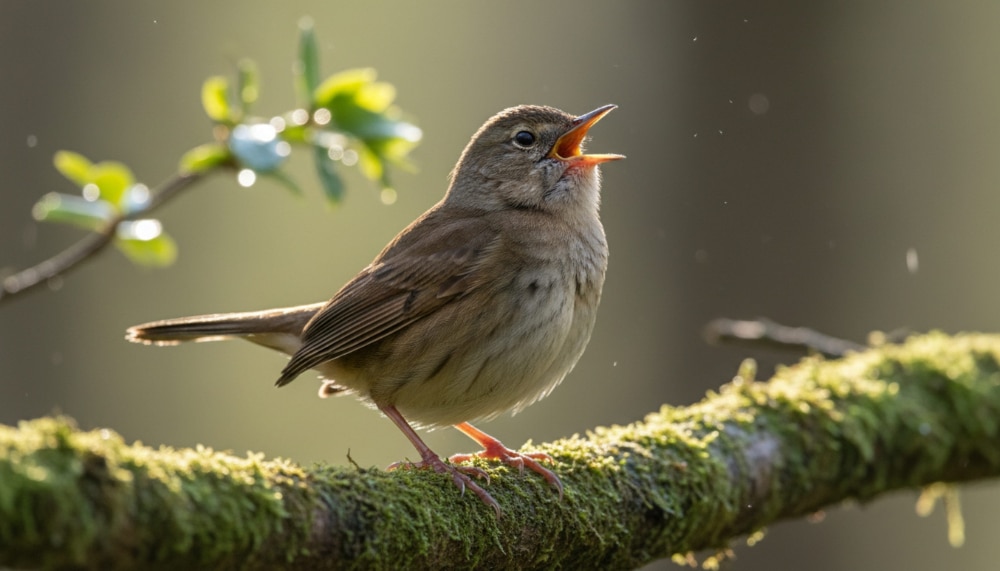
Recently, an intriguing story made the rounds about how 10 minutes of birdsong resulted in a significant reduction of stress levels. If that’s the case, why don’t we play birdsong everywhere to better manage stress?
I first spotted the story at StudyFinds, a website with an interesting business model. It appears they’re paid by sponsors to write stories about scientific studies the sponsor has a vested interest in pushing. In this case, the sponsor appears to be forest restoration, as the story repeatedly endorses urban forest restoration.
The study itself ran in the scientific journal, Environmental Conservation. The research was conducted at North Carolina State University in Raleigh by the Department of Forestry and Environmental Resources and the Department of Parks, Recreation, and Tourism Management. The design of the study reveals a lack of participation by the psychology department.
See if you can spot some of the problems with this study. The 106 participants were all students studying natural resources at the university. Out of all the participants, 56% identified as female, 38% as male. They were each given a folding chair, a set of noise-cancelling headphones, and a series of two recordings downloaded as .mp3 files on their own phones.
Participants could choose their own day for conducting the listening sessions, as long as it wasn’t raining and the temperature outside was between 20 and 25 degrees centigrade. They were asked to listen to two different soundscapes at two different locations back to back on the same day (total time = two hours).
One location was a restored forest at UNC and the other was outside the student union at UNC. The precise location for placing the chair was marked, including the facing direction. Participants faced a busy road near the student union and faced away from the trail in the forest to minimize distraction.
Participants put their noise-cancelling headphones on and first listened to five minutes of recorded silence as an “acclimatization period” to adjust to the environment. They then heard one of two recordings in random order:
The 10-min birdsong soundscape used in the study was extracted from a recording from a freshwater marsh in the St. Marks National Wildlife Refuge (Florida, USA) on the afternoon of May 17, 2023.
The 10-min traffic noise soundscape used in the study was extracted from a recording at a busy intersection in Créteil (Val-de-Marne, France, within the Greater Paris metropolitan region) on 12 November 2020.
After the first soundscape, participants immediately completed a cellphone survey, then listened to the second soundscape and completed another survey. They immediately relocated to the second setting and repeated the process, completing a cellphone survey after listening to each recording.
The locations were randomly assigned, and the order of play of the soundscapes was random. However, in all cases, participants were familiar with both recordings when they completed the second sitting. I imagine sitting through these recordings the second time might be very different than the first experience.
The survey was also identical for each of the four listening sessions. First, describe your level of stress right now, from zero to 10. Then came a 12-item questionnaire assessing the scale of positive and negative experience, or SPANE, by presenting a word for a feeling, and then comparing it with what the participant is currently feeling.
Feelings are rated on a five-point Likert scale from “Never” to “Always.” Half the feelings are negative, half are positive, such as happy or sad. Finally, participants complete a Perceived Restorativeness Scale (PRS), where they rate five provided sentences as to how much they reflect their feelings at this time and place.
Unsurprisingly, the study found what it was designed to find: that listening to birdsong in a natural environment is more calming than listening to traffic while sitting next to a busy road. The headline result was that “listening to birdsong in a restored forest for as little as 10 minutes relieves stress.”
How about just being in a forest, restored or not? Yes, they found that it was stress-relieving just being at the forest location. How about just listening to the birds in the forest location instead of wearing a pair of headphones with non-local bird calls? What happens with one minute of listening instead of 10 minutes? What if the subjects aren’t all college-aged students with little hearing loss?
I could go on about what happens when forestry students design psych tests, but let’s just check in with the experts and see what they say. The Department of Forest Resource Management at the Swedish University of Agricultural Science in Uppsala had the good sense to partner with the psych department at the University of Pennsylvania for their study of how birdsong impacts stress.
Their study involves a similar number of participants (117) who are first given electrical shocks before listening to soundtracks to determine how long it takes them to recover. Rather than self-scored surveys, they used biometric data such as heart rate and respiration to assess the impacts. And the results? Drumroll, please:
No Evidence of Bird Song Improving Stress Recovery
It’s a great theory that a few minutes of birdsong in a natural environment brings down stress levels, but the idea that a couple of minutes of exposure to fake birdsong soundtracks is going to have a significant impact on stress is unwarranted. For now, it appears there’s no substitute for spending significant time on a regular basis in natural settings where you hear real birds.
Written by Steve O’Keefe. First published August 3, 2026.
Sources:
“Just 10 Minutes Of Birdsong In Forest Linked To Stress Relief,” StudyFinds, July 22, 2026.
“Both restored forest and birdsong promote psychological well-being, “Environmental Conservation, July 17, 2026.
“Sounds of Nature in the City: No Evidence of Bird Song Improving Stress Recovery,” International Journal of Environmental Research and Public Health,
Image Copyright: pixora.