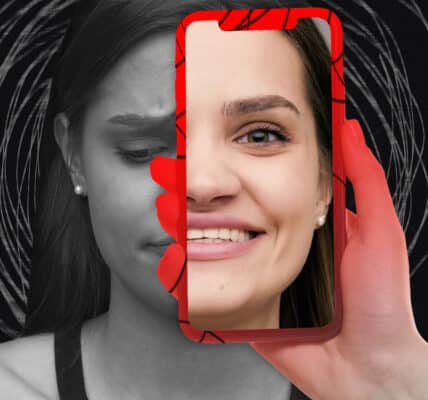
Judgment Day Approaches for Social Media Addiction

Last week, in a courtroom in Los Angeles, prospective jurors began to be seated in one of the most important business legal dramas in a generation. The defendants are the parent companies of YouTube, Facebook, Instagram, TikTok, and Snapchat. They’re being accused of intentionally designing products they knew would be harmful to users’ mental health.
The implications of this trial (and two related trials scheduled to go before juries this year) are similar to the big tobacco case from 2006, where cigarette manufacturers were found guilty of hiding the health hazards of their products.
In a deep dive on the case for Reuters, former Bloomberg reporter Courtney Rozen writes that this case “will be the first time the tech giants must defend themselves at trial over alleged harm caused by their products.”
The current case is known as “KGM” for the initials of the plaintiff, a woman from California who claims to have become addicted to social media as a child. She was the alleged subject of sexploitation resulting in self-harm and suicidal ideation. Her case is considered a test case that opens the door to thousands of consolidated lawsuits against social media companies.
The novelty of this lawsuit, which has allowed it to progress further than any attempt to hold social media companies accountable for the damages caused by their platforms, is that it gets around the Section 230 shield of the Digital Millennium Copyright Act (DMCA). The act says platforms are not responsible for third-party content as long as they take reasonable measures to remove illegal content in a timely manner.
The KGM lawsuit argues instead that social media companies intentionally designed their platforms to become as addictive as possible, and they ignored their own internal evidence that this addiction would be harmful to children’s mental health.
The social media companies basically have no choice but to fight this out in front of a jury because there are so many thousands of cases cued up that a settlement would be devastating. Still, as we reported earlier, Snap, Inc., the parent of Snapchat, settled on January 20 for undisclosed terms just days before its CEO Evan Spiegel was to testify.
Meta CEO Mark Zuckerberg is expected to testify concerning Facebook and Instagram. YouTube is trying to argue it’s not a social media platform and should not be included in the KGM suit, according to Reuters. TikTok just changed ownership, and no one is quite sure how that will impact their legal strategy in the KGM suit.
Clay Clavert, who has written extensively on this case for the American Enterprise Institute, summarized the history of the proceedings:
In November 2025, [California Superior Court Judge Carolyn B.] Kuhl greenlighted the trial on negligence and negligent failure-to-warn theories when she denied the defendants’ motions for summary judgment and summary adjudication.
The design features in the complaint include autoplay, unlimited scrolling, and image filters that distort the appearance, causing body dysmorphia. The plaintiffs claim to have internal company documents that show defendants knew features could induce social media addiction and that this addiction would be harmful to mental health, especially for young persons. The defendants used the algorithms regardless.
Ahead of trial, the companies have been working overtime to verify the ages of their users and to prohibit children from unrestricted access to their platforms. CNN reports on Meta’s efforts, beginning in 2024, to “provide default privacy protections and content limits for teen users on Instagram” using the Meta “teen accounts” program.
All the platforms now use artificial intelligence (AI) to identify and restrict underage users. YouTube has also taken measures to properly label — and restrict access to — excessively violent or sexualized material, according to CNN. TikTok has disabled late-night notifications.
These cases are a long way from being settled. Snapchat remains a defendant in the other two big consolidation cases. If the defendants are found guilty of knowingly harming children’s mental health, a percentage of responsibility must be attributed to the algorithm versus the content. Each defendant will be able to argue that their algorithm was not knowingly harmful. Achieving a final verdict could be many years away. Stay tuned to AddictionNews for updates.
Written by Steve O’Keefe. First published February 2, 2026.
Sources:
“Meta, TikTok, YouTube to stand trial on youth addiction claims,” Reuters, January 26, 2026.
“High Stakes as Country’s First Social Media Addiction Trial Nears and Snap Settles,” American Enterprise Institute, January 22, 2026.
“Meta and YouTube head to trial to defend against youth addiction, mental health harm claims,” CNN, January 26, 2026.
Image Copyright: natakot.