
Behavioral Activation: Winston Churchill’s Treatment for Depression
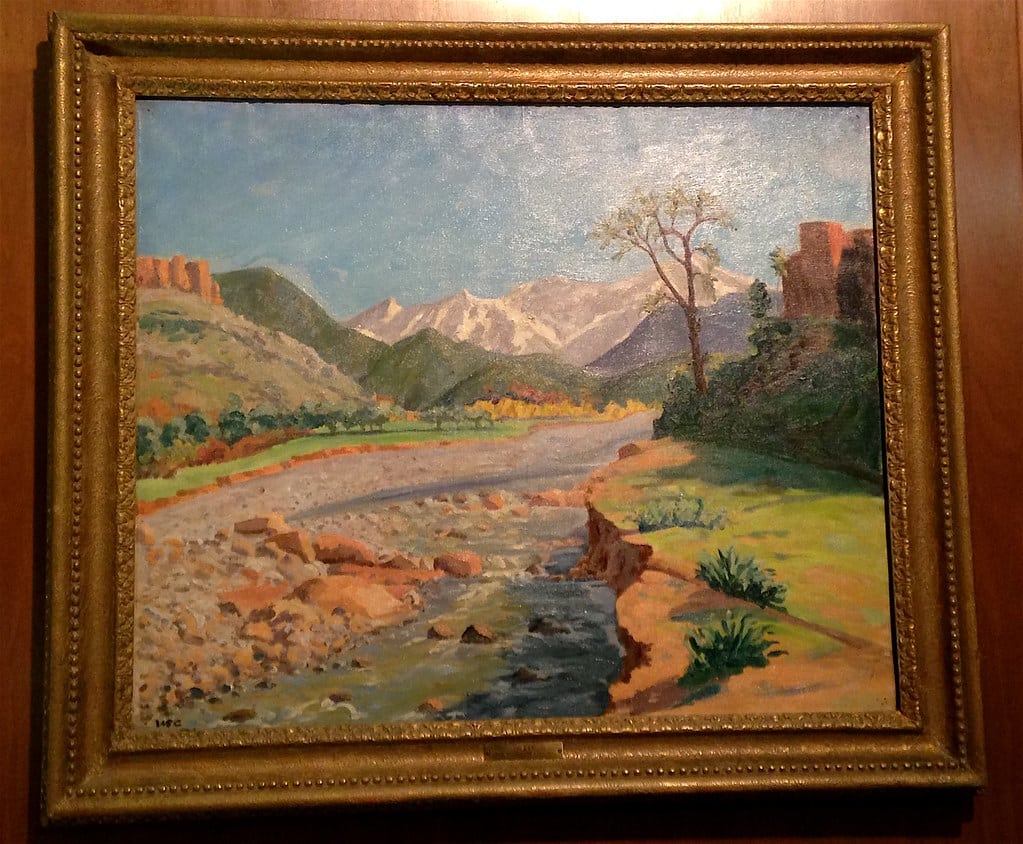
Winston Churchill suffered from bouts of depression, which he referred to in letters to his wife Clementine as an unwelcome “black dog” that visited him from time to time. Churchill had a theory about keeping that black dog at bay.
He felt the black dog was summoned by overwork by people with great responsibility over others. The treatment he devised to get the black dog to back down was painting. Coaxed into writing about his art therapy, Churchill penned a pair of essays for The Strand Magazine that appeared in December 1921 and January 1922.
The first essay is entitled “Painting as a Pastime,” and includes the following observations:
- A man can wear out a particular part of his mind by continually using it and tiring it, just in the same way as he can wear out the elbows of his coat.
- Many remedies are suggested for the avoidance of worry and mental overstrain by persons who, over prolonged periods, have to bear exceptional responsibilities and discharge duties on a very large scale.
- The tired parts of the mind can be rested and strengthened, not merely by rest, but by using other parts.
Churchill also took up the craft of bricklaying and devoted hours at a time building structures at Chartwell, the family estate. He wrote of making 2,000 words a day and laying 200 bricks. Churchill felt it was important to engage in non-linguistic activities using the hands to balance the overstrain of abstract thinking. In scientific terms, Churchill was advocating for behavioral activation, or what we refer to as habit substitution.
Behavioral activation has long been prescribed, with cognitive behavioral therapy (CBT), for the treatment of depression, post-traumatic stress disorder (PTSD), and grief. It involves “Engaging in helpful activities that promote adjustment to the new situation,” according to a randomized, controlled trial involving people on a waiting list for grief counseling as a result of a pandemic-related death.
Behavioral activation involves creating goals for engaging in activities one used to enjoy, or taking up new activities that occupy the mind and reduce dwelling on negative thoughts. Behavioral activation involves identifying these activities and outlining the steps needed to achieve them.
Particular attention is paid to adopting activities that are nonverbal. The activity could be musical, drawing, painting, woodworking, sewing, gardening, working with animals, etc. It should not be a passive activity, such as watching videos or listening to music, although both of those activities can be therapeutic.
Writing assignments, which are often part of CBT, are not considered suitable activities for behavioral activation because they are verbal. A study published in the American Journal of Recreation and Sports found that:
[E]ngaging in recreational activities, such as art, music, and physical exercise, can significantly alleviate anxiety symptoms. These activities provide a distraction from pain and discomfort, enhance mood, and promote relaxation.
These activities reduce cortisol levels and increase the production of natural endorphins. They lead to reduced anxiety and depression, improved quality of life, and better mental health outcomes.
A randomized, controlled trial assessing the efficacy of medication, CBT, and behavioral activation conducted at the University of Washington found that, for patients diagnosed with the most severe depressive disorder, behavioral activation worked as well as prescription medication, and both worked better than CBT.
Winston Churchill painted more than 500 paintings in his lifetime. He never considered himself to be a good painter, but he was wise enough to know that wasn’t the point. He left behind many beautiful paintings and brick structures that stand as testimony to the importance of developing nonverbal hobbies to restore mental balance and inspire mental resilience.
Written by Steve O’Keefe. First published May 27, 2026.
Sources:
“Winston Churchill battled his depression by staying busy, laying ‘200 bricks’ every day,” Upworthy, May 8, 2026.
“Did Sir Winston Churchill suffer from the ‘black dog’?,” Journal of the Royal Society of Medicine, October 26, 2018.
“Self-guided online treatment of disturbed grief, posttraumatic stress, and depression in adults bereaved during the COVID-19 pandemic: A randomized controlled trial,” Behavior Research and Therapy, April 2023.
“Effects of Recreational Therapy on Anxiety Levels in Patients with Chronic Illness,” American Journal of Recreation and Sports, August 31, 2024.
“Randomized trial of behavioral activation, cognitive therapy, and antidepressant medication in the acute treatment of adults with major depression,” Journal of Consulting and Clinical Psychology, August 2006.
Image of the Atlas Mountains, painted by Winston Churchill, courtesy of valoisem and used under Creative Commons license.