Juneau, Alaska, Offers State-Of-The-Art Addiction Treatment
We’ve been watching Alaska’s state capital, Juneau, for some time now. The state is plagued by opioid addiction. The opioid overdose death rate in Alaska for 2024 was 37 deaths per 100,000 population, second only to West Virginia, with 38.6 deaths per 100,000 population.
Part of the reason for such an extremely high rate of opioid overdose death is that Alaskan Natives have the highest death rate among all races and ethnicities, with 35.5 deaths per 100,000 people. This compares with 22.8% for Black Americans and 17.5% for White Americans in 2024.
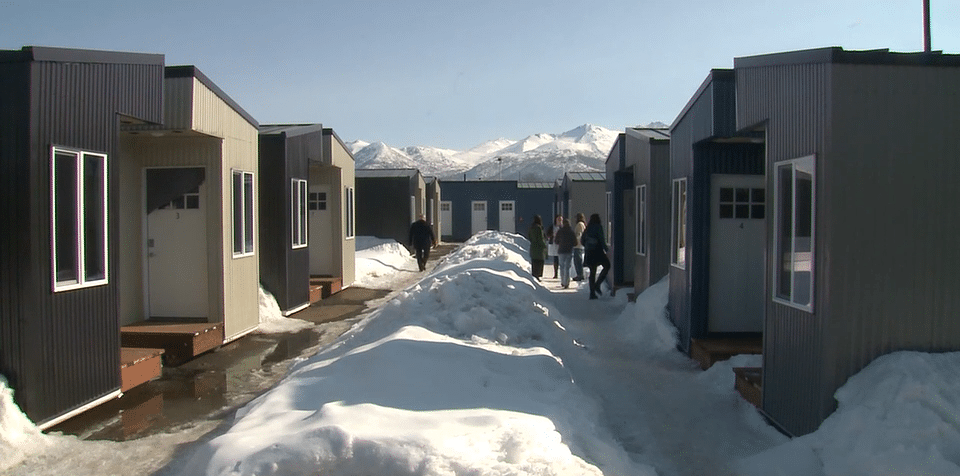
Alaska is determined to bend the curve on opioid use disorder (OUD) and overdose deaths. Last August, they announced the construction of 24 “tiny houses” in Juneau for patients who are in an addiction treatment program.
While widespread distribution of naloxone (Narcan) is credited with bringing down overdose death rates, the people whose lives were saved often were discharged from the hospital onto the streets. Without housing or transportation, they were unlikely to stay in an addiction treatment program.
By offering housing with addiction treatment facilities onsite, Alaska believes it can hold onto opioid addicts for the 30 days it usually takes to break the physical addiction to opiates. It also gives the state time to find subsidized housing for those who have completed treatment and need to transition to a non-residential program.
Those cities that lack affordable housing for addiction treatment should study up on the Juneau program. Funded with $1.2 million in opioid settlement grants, that comes to $50,000 per unit including all common area costs. A matching grant allowed for building eight additional units. The City of Juneau owns the housing. The units are portable and can be repurposed, for example, to provide emergency housing for earthquake victims.
Juneau broke ground on the project in August and completed it in April. Are you listening, California, where housing for the homeless costs up to $400,000 per unit and takes years to build? According to Summer Bond, with the Anchorage Recovery Center, manager of the program, there are only two criteria to stay in one of the tiny homes:
- You must be homeless.
- You must be enrolled in an addiction treatment program.
That’s so simple! All 32 units were spoken for in the first month after opening. There is currently only one person on the waiting list, according to an article by Alaska Public Media. Residents spend hours each day in individual and group therapy sessions doing the hard work of recovery. Their needs and skills are individually assessed, and graduates are provided with job placement services or help enrolling in school.
We’ll keep an eye on the Juneau experiment. Hopefully, it will show other cities that affordable housing is the first step on the path to addiction recovery.
Written by Steve O’Keefe. First published April 15, 2026.
Sources:
“Anchorage opens new homeless program that pairs tiny homes with addiction treatment,” Alaska Public Media, April 7, 2026.
“Residents are moving in — Anchorage opens tiny homes to treat addiction among those experiencing homelessness,” KTUU, April 2, 2026.
“Opioid Overdose Deaths: National Trends and Variation by Demographics and States, KFF, February 24, 2026.
Image courtesy WTUU, used under Fair Use: Commentary.