
Addiction Prevention Begins With Preventing Child Abuse

In yesterday’s April Fools Day blog post, we looked at the incredible mismatch between the way governments spend money on drug abuse research, prevention, and treatment, and what actually works. For example, the largest share of those resources goes to school drug use prevention programs, which are proven not to work.
A great deal of money is also spent on messaging through advertisements, billboards, brochures, posters, merch, etc., which also does not work. Very little money is invested in housing for patients during addiction treatment, even though the housing can be reused and repurposed, unlike a TV ad.
Perhaps nowhere is the divide between what works and what gets funded greater than in the prevention of child abuse. The majority of people in treatment for substance use disorders (SUDs) experienced childhood sexual abuse, and yet I cannot find one penny in federal drug abuse prevention funds spent on preventing childhood sexual abuse.
The federal government does provide a measly $2 million per year for research into the prevention of childhood sexual abuse through the Centers for Disease Control’s Division of Violence Protection. The majority of federal spending to prevent child abuse comes through the Child Abuse Prevention and Treatment Act (CAPTA), which, for decades, has facilitated grants to the states for child abuse prevention. CAPTA’s authorization expired on September 30, 2025. Yet CAPTA is still operating and, according to Congress.gov, has issued $176 million in state grants in fiscal year 2026.
The Annie E. Casey Foundation, funded by heirs to the UPS fortune, is “dedicating at least half of our investments over the next decade to improving the well-being and prospects of youth and young adults ages 14-24.” Their website contains a wealth of information about the nature of the problem, including the good news that child abuse in general is on the decline.
Their statistics are based on those collected by child protective services in each of the states and territories. They include both abuse and neglect, which is the failure to provide adequate support for growing children. Neglect accounts for 74% of all reported child abuse, with physical abuse accounting for 17% of reported cases and sexual abuse accounting for an additional 10% of reported cases of child abuse.
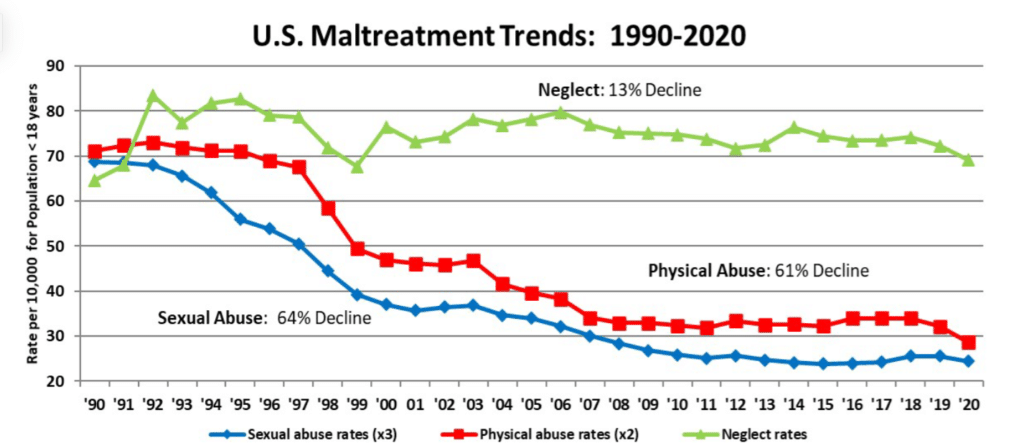
Figure 1: The numbers have been magnified in order to show all three trends on one graph. Courtesy University of New Hampshire, used under Fair Use: Commentary.
Figure 1 shows a somewhat deceptive chart from the University of New Hampshire that nonetheless captures the trendlines showing nearly 20 years of steep declines in both child physical abuse and child sexual abuse, followed by 10 years with very little decline. The researchers tripled the count of sexual abuse and doubled the count of physical abuse in order to get the trend lines to appear on the same graph as “Neglect,” which has remained remarkably consistent at seven cases per 1,000 children for 30 years.
The fastest way to reduce the rate of child abuse is to reduce the poverty rate. The two are so closely tied that here’s what happened when the federal government passed the short-lived child tax credit (EITC) in 2021, according to Prevent Child Abuse America:
Rates of child abuse and neglect plummeted the week following the distribution of the EITC and lasted for four weeks.
To dramatically cut child abuse, dramatically reduce the number of children in poverty. This is proof that the mental health of the parents or caregivers is what drives childhood mental health. When the stresses caused by poverty are relieved, the mental health of the whole family improves.
This is proven through research conducted by an international team using Multisystemic Therapy for Child Abuse and Neglect (MST-CAN) to treat 144 parent/child pairs who volunteered for the intensive program after being found guilty of child abuse or neglect. MST-CAN is a round-the-clock, therapist-monitored program involving weekly site visits for a minimum of 26 weeks. Some of the features of MST-CAN include:
- Cognitive behavioral therapy
- Reinforcement-based therapy
- In-home crisis management training
- Teaching parenting skills
“Our results showed that child neglect, as well as parental stress, significantly decreased and parental mental health significantly improved during the program,” the researchers report. They note that “a decrease in parental stress significantly predicted the reduction of child neglect.”
Intervention early in life with programs that reduce poverty and reduce parental stress pays large dividends in childhood mental health and substance use resilience. Parent-Child Interactive Therapy (PCIT) is a gentler version of MST-CAN and has a terrific track record of building confidence and resilience in infants and children. Of course, this is accomplished by teaching the parents better ways of coping with the demands of infants and children.
When it comes to drug abuse prevention in America, the best thing we could do, honestly, is take all the money we spend on programs that are proven not to work — such as the billions wasted on drug-resistance school programs — and bring back the $300/month EITC, which cut child poverty in half. Spend the rest of the savings on intensive therapy for abusive parents. Soon, the problem will be under control at a fraction of the cost.
Written by Steve O’Keefe. First published April 2, 2026.
Sources:
“About CAPTA: A Legislative History,” Administration on Children, Youth and Families, Health and Human Services, February 2019.
“National Statistics on Child Abuse,” National Children’s Alliance, 2026.
“Prevent Child Abuse America’s Statement on Declining Child Poverty Reports,” Prevent Child Abuse America, 2026.
“Child Welfare: Purposes, Federal Programs, and Funding,” Congress.gov, February 9, 2026.
“Updated Trends in Maltreatment,” Crimes Against Children Research Center, March 2022.
“Multisystemic therapy for child abuse and neglect: Parental stress and parental mental health as predictors of change in child neglect,” Child Abuse & Neglect, April 2022.
Image Copyright: dragonimages.