
Is the Addicted Brain Overlearning?
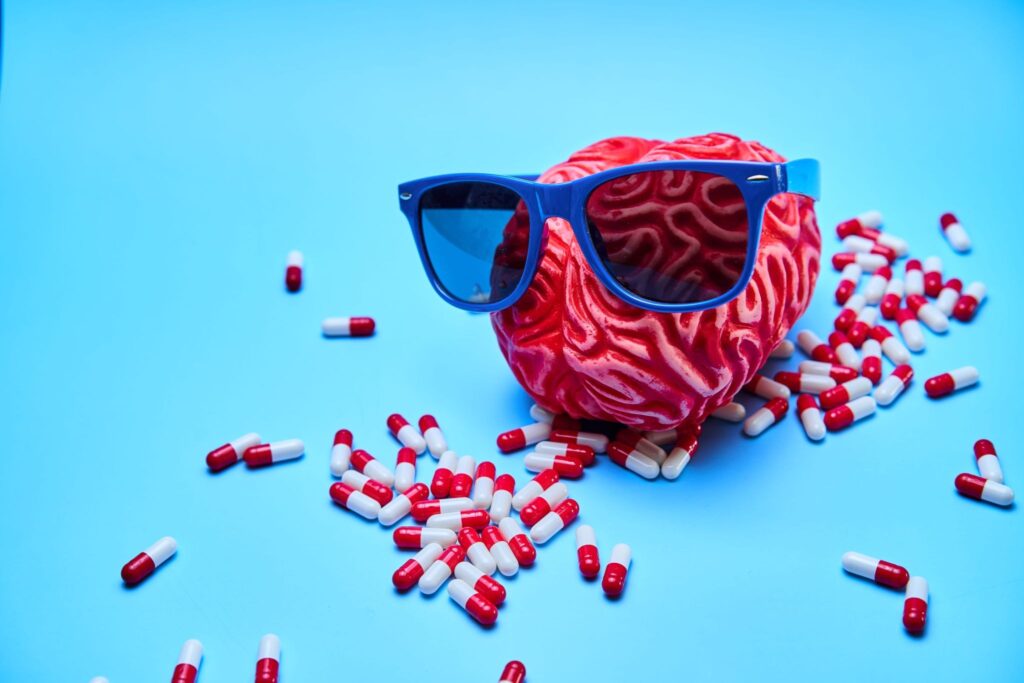
One theory of addiction is that it is the result of pathological overlearning. The brain learns what is offered as a reward and returns to it again and again. But is that the end, or start, of the story? And what is revealed in our quest for artificial intelligence?
In Quit Like a Woman, a book about alcohol use disorder, the author recounts the thesis of overlearning found in the book The Biology of Desire:
Lewis argues that addiction is the brain reacting to a motivating experience the way it is supposed to and that addiction is the product of a brain that learns and adapts to repeated experiences, and that because the brain is doing what it is built to do, addiction can’t be a disease — it’s a pathological overlearning, a feedback loop with dire consequences. (emphasis added)
Pathological overlearning makes sense if you consider addiction from a reward motivation perspective. That may be partly true. But like a card trick, focusing only on reward obscures perhaps the larger, and initiating, motivation for relief.
Notably, in The Biology of Desire, the aforementioned author (Lewis), a neuroscientist and professor of developmental psychology, notes an important clue, writing, “The measurable brain changes that characterize addiction usually disappear when people stop using.”
A few paragraphs later, Lewis comes closer to describing displacement:
The powerful attraction to addictive drugs and activities is a response to some degree of emotional suffering, including social isolation and recurring negative emotions. (emphasis added)
It is possible that both are true. First, there is the need for stress displacement. This is followed by pathological overlearning when the addictive substance or behavior is found. And once the addictive substance (or urge) is stopped, the brain can recover.
The Unified Theory of Addiction states that irrespective of substance or behavior, all addictions stem from a response to emotional distress, which drives displacement activities.
But brains are funny things. They are at the very least governed by biology, psychology, and cultural forces. And once we get a grip on those rudimentary facts, we suddenly realize how little we know about what else influences those surprisingly squishy things in our skulls, from environmental influences to injuries, that may influence our potential for addiction.
And intelligence? Forget about it; humans cannot agree on how to measure intelligence. Look no further than a lot of discussion today about so-called intelligence when its source is artificial. Here, illusions abound.
Right now, AI chatbots seemingly have the power to drive addictive temptation and psychosis. Some are even demonstrating preferences of their own. But as they get smarter, they also get dumber.
How? Like the oroboros eating its tail, an “AI model collapse” happens when a generative AI model eats up all the human-made internet data and starts training on synthetic (AI-generated) material. The influx of artificially generated material starts to crowd out the human-made material. Goodbye edge cases, individual nuances, and the other random associations human brains use to make meaning and communicate with others. AI slop is rolled up and baked into the next model, and the one after that.
This is no small thing. A 2025 report estimated that a little more than 50% of online content was artificially generated. Although there are technical limitations to counting, this suggests the potential for an echo chamber of learning, and a lessening of the output quality. (A bright spot? It appears this situation may be plateauing.)
One might say that the troubles of AI model collapse (garbage in, followed by garbage out) mirror the troubles of pathological learning (unwanted behavioral outcomes).
This comes full circle with AI’s ability to influence human brains. One small experiment, for example, demonstrated that artificially generated images and videos can implant false memories. “AI-edited visuals significantly increased false recollections, with AI-generated videos of AI-edited images having the strongest effect,” researchers wrote. Might this effect be stronger in brains experiencing addiction? New studies are necessary.
Here we dovetail with what society “knows” to be true about addiction. Where are the illusions?
The frameworks we commonly use to explain addiction are doggedly stuck. We look through the lens of personal experience and/or through examination of the substance (or behavior) of abuse. Both are valid data points. But like AI-made synthetic material with the potential to influence memories, we fail to plainly and accurately see that there is a shared origin. That origin is stress displacement, perhaps pathologically strengthened by the brain’s innate learning ability.
Written by Katie McCaskey. First published August 11, 2026.
Sources:
Quit Like a Woman: The Radical Choice to Not Drink in a Culture Obsessed with Alcohol, The Dial Press, 2019.
The Biology of Desire: Why Addiction Is Not a Disease, Marc D. Lewis, 2016.
“AI models collapse when trained on recursively generated data,” Nature, July 24, 2024.
“Over 50 Percent of the Internet Is Now AI Slop, New Data Finds,” Futurism, October 14, 2025.
“Synthetic Human Memories: AI-Edited Images and Videos Can Implant False Memories and Distort Recollection,” Arxiv, September 13, 2024.
Image Copyright: redfer.