
Substance vs. Behavior Debate Doesn’t Abate
Can a person be said to be addicted to food? Or to eating? Those questions are still intensely discussed. For convenience, at the end of this post is an assortment (only a partial list) of several AddictionNews pieces that have examined that issue from various angles.
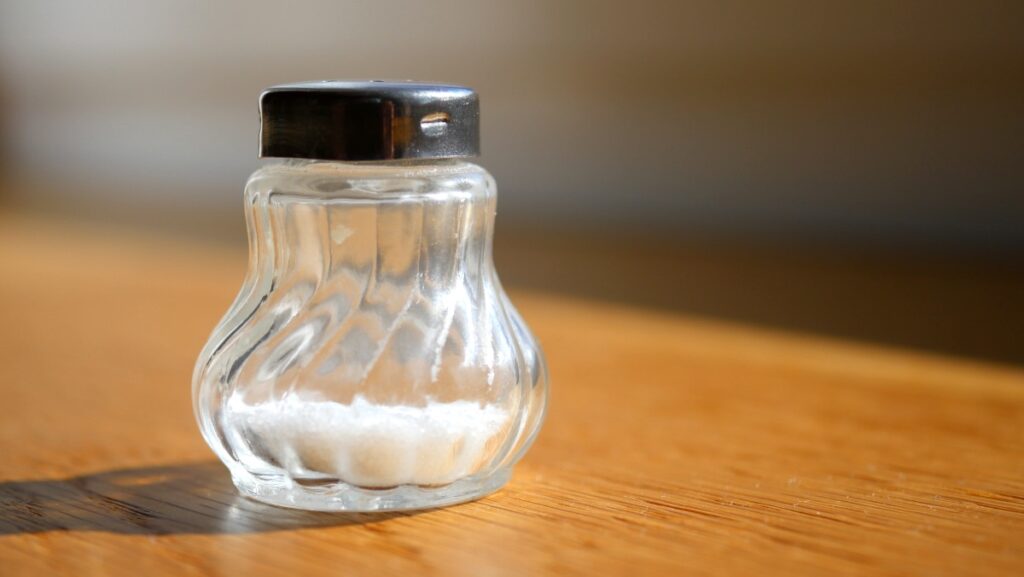
Incidentally, is it only a coincidence that most claims of food addiction arise from two main substances, sugar and salt? What kind of addiction potential are we talking about here? A recent article from HealthViews Online breaks it down for us. The body needs glucose, especially in its brain, but has the convenient ability to make glucose from other substances. Life can proceed quite satisfactorily without added sugar. Sodium chloride (salt), on the other hand, needs to be brought in from outside the body, lest severe consequences ensue.
One of the strange angles about addiction is the feeling that they would die without it sustaining their life, which is exactly how a serious addict feels about their habit. An addict suffers from the conviction that life is not worth living, and indeed will probably end, unless they can get the substance of choice into their body somehow.
If salt is not addictive, why do people sometimes desire it as intensely as a drug? The body unquestionably needs a certain amount of salt, or matters can go seriously awry in several departments. But never fear. In the modern world, a lack of salt is suffered by very few people. We are far more likely to absorb way too much of it, which may result in damage to our blood vessels, heart, kidneys, and brain.
So, why do we crave it like junkies? The Cleveland Clinic says the cause can be stress, insufficient sleep, premenstrual syndrome, exercise, Addison’s Disease, and boredom. There are ways to avoid that feeling of desperately needing a salt fix. Become sufficiently hydrated. Experiment with other spices, ones that deliver flavor without side effects. Gradually train your taste buds to expect less salt. And seven other suggestions. In other words, yes indeed, we absolutely require salt… but nowhere near as much of it as the body tries to fool us into thinking we need.
And then, binge eating disorder comes into this somehow. But not everyone who is tempted to self-diagnose a food addiction actually wants to go nuts with it. In many cases, the craving is not for an orgiastic binge. The felt need is for comfort and consistency. Many people who experience what feels like food addiction are not looking for an incendiary vacation fling. They want a nice, calm, steady, dependable marriage, knowing that the substance they love will be reliably available on call, every day.
The problem is an easy one to lie to yourself about because “everybody knows” food is not addictive. One error in this thinking is to discount the reality of behavioral addiction, which is different from substance addiction. Sure, maybe in the most strict technical sense, cookies are not addictive. Many people have made the case that sugar is addictive, while others argue that it really couldn’t be, because then about 80% of Americans would have to be classified as addicts.
However, it might not necessarily be the substance, but the helpless continuous consumption of it — the behavior — that is addictive. It is so easy to rationalize. For example, “My grandma puts sugar in her tea, and she’s certainly not an addict, so it’s wrong to say sugar is addictive.” Yet and still, the behavior —eating stuff with sugar in it — could legitimately qualify as an addiction.
This quotation is from Jacob Sullum, a senior editor at Reason:
Anything that provides pleasure (or relieves stress) can be the focus of an addiction, the strength of which depends not on the inherent power of the stimulus but on the individual’s relationship with it, which in turn depends on various factors, including his personality, circumstances, values, tastes, and preferences… [T]he reality of addiction lies not in patterns of brain activity but in the lived experience of the addict.
Here are some of our articles on the subject for you to check out:
Food Addiction vs. Eating Addiction
Is Food Addiction a Substance Use Disorder?
Sugar, Addictiveness, and Dopamine
Scientists Identify a “Gut Brain” That Impacts Eating Addiction
Eating Addiction Rages Among Middle-Aged American Women
TOWARD an Intensive Lifestyle Intervention for Eating Addiction
Written by Pat Hartman. First published May 7, 2026.
Sources:
“Like Salt, Does Human Body Need Sugar To Survive?,” HealthViewsOnline.com, February 26, 2015.
“Why Do You Crave Salt?,” ClevelandClinic.org, December 15, 2020.
“Research Shows That Cocaine and Heroin Are Less Addictive Than Oreos,” Reason.com, October 16, 2013.