
Global Conference on Addiction and Psychiatry (GAP 2026)
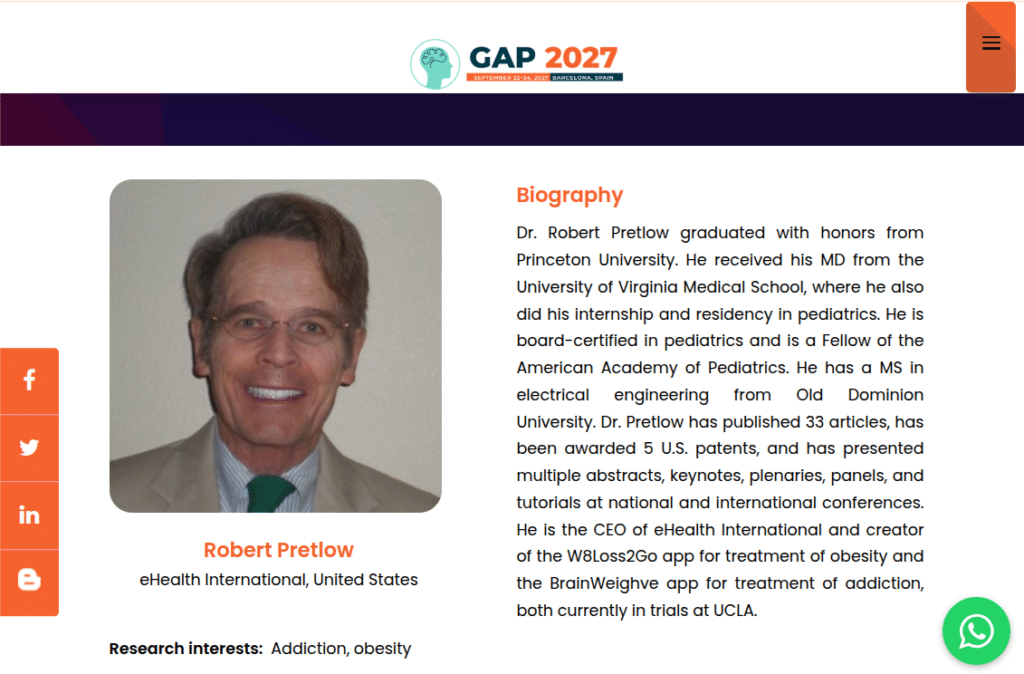
In a recent presentation for the Global Conference on Addiction and Psychiatry (GAP 2026), Dr. Robert Pretlow, MD, FAAP, publisher of AddictionNews, laid out the latest version of his Unified Theory of Addiction and responded to criticism that the theory is “too simple.” Not wrong; too simple.
The 22-minute video presentation is now available on YouTube. It begins with the origins of displacement theory in the study of animal behavior. Some of this is not easy to watch, and viewer discretion is advised.
The images of displacement behavior in humans are also not easy to watch: alcoholism, obesity, drug addiction, and gambling addiction. Dr. Pretlow explains how addiction is the result of an “overflow of motivational energy” resulting from stressful situations.
This motivational energy can be channeled into harmless repetitive behaviors, such as hobbies. Fishing, bowling, running, dancing, woodworking, knitting — all sorts of physical activities can become successful outlets for excess motivational energy.
Even activities that are not especially physical will do the trick, such as playing video games, working puzzles, painting, playing an instrument, cooking, gardening, singing, etc. Passive activities, such as watching videos or listening to music, do not exhibit the same capability to relieve this excess energy.
That’s probably why these passive activities are often accompanied by active displacement activities such as excessive eating, drinking, and drug use. There is a ritual to substance abuse, and that ritual may be more important than any intoxication.
The ritual involves the anticipation of use, the seeking out of the substance, the act of procurement, then the moment of use. It is a drama that can replay over long stretches of time until it becomes an infinite loop. At this point, there is constant “food noise” or “alcohol noise” or “gambling noise” with irrepressible thoughts of use.
Some of the key points in Dr. Pretlow’s unified theory include:
- People continue to overuse long after tolerance diminishes reward.
- The similarity of behavioral disorders and substance use disorders.
- The same treatment appears to work for both types of disorders.
On this last point, Dr. Pretlow used some of the amazing work on GLP-1 drugs done by the team here at AddictionNews. The fact that GLP-1 drugs have been shown to be effective against both behavioral disorders such as gambling addiction, shopping addiction, and pornography addiction, as well as substance use disorders indicates the drugs are treating a common mechanism.
That mechanism is displacement, according to Dr. Pretlow, and he has helped develop a system of cognitive behavioral therapy (CBT) that can be inexpensively delivered and is consistently effective. And it’s not GLP-1 drugs, because they don’t rechannel motivational energy; they disrupt it.
Without a natural method for displacing stress, the compulsive behavior returns as soon as the GLP-1s stop. What is this natural method for redirecting excess motivational energy, or stress? We’ll examine that in Part 2 of this report later this week.
Written by Steve O’Keefe. First published September 23, 2026.
Sources:
“A Unified Theory of Addiction,” A presentation by Dr. Robert Pretlow for the Global Conference on Addiction and Psychiatry (GAP 2026), August 25, 2026.
Image courtesy of the Global Conference on Addiction and Psychiatry, used under Fair Use: Commentary.