
Is Mental Health Care Fueling Social Conflict?
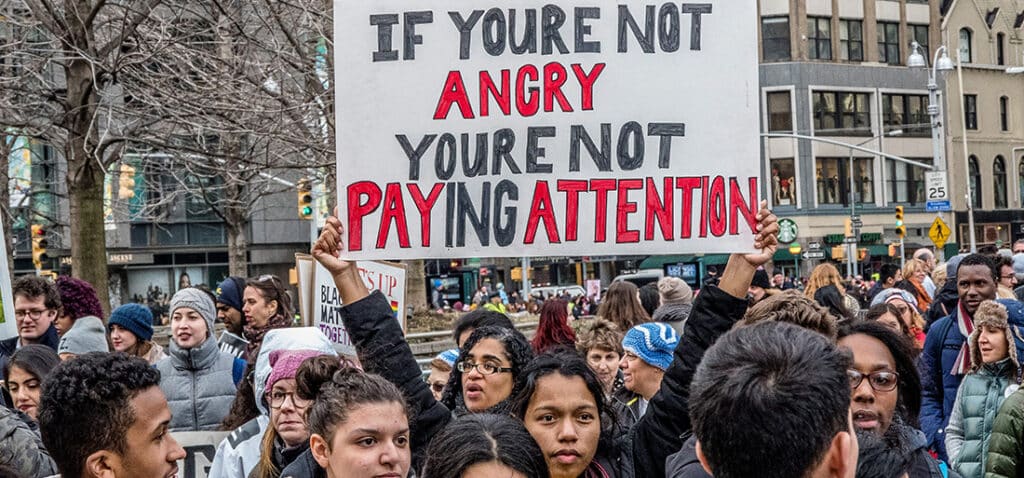
In the middle of a global catastrophe, with AI therapists giving serial killers encouragement, psychotherapist and media commentator, Jonathan Alpert, says human therapists are the problem, not just the bots.
In a well-hyped new book, Therapy Nation, Dr. Alpert says that the desire of real-life therapists to be helpful, accommodating, and positive has resulted in patients who feel entitled to their grievances, “teaching patients to locate the problem everywhere but themselves.” In a piece for The Free Press, Dr. Alpert writes:
Too much of modern therapy culture keeps people stuck, reinforcing grievance, externalizing blame, and turning everyone else into the reason their lives are so miserable.
The problem, asserts Dr. Alpert, is that psychiatrists and psychologists are trained to reinforce “the most self-protective interpretation available,” helping patients locate the source of trouble away from themselves. This sets up a financial conflict of interest as well, with patients being soothed rather than confronted.
The problem with locating the problem in others is that it encourages a protective stance of reduced engagement. Patients hold onto their grievances rather than getting over them and moving on. Their problems tend to multiply as careless comments become insults, and insults become abuse.
Most people first seek out psychological assistance as a result of struggles with family members or coworkers. Improving relationships is the goal of a great deal of therapy. Yet Dr. Alpert argues that the reinforcing advice of therapists is leading to greater estrangement at home and increased isolation at work. And it’s impacting our politics:
The same therapeutic scripts that encourage patients to pathologize difficult bosses and disappointing partners now teach citizens to reinterpret ordinary democratic differences as evidence of danger. The result is a society less capable of living with differences, less able to tolerate friction, and more likely to retreat into emotionally curated silos and echo chambers.
These “emotionally curated silos and echo chambers” include media bubbles and social media bubbles, where people adept at using filters have screened out unpleasant or opposing points of view. They increasingly do not tolerate media that attempt to cover opposing views. The Substackification(™) of the culture allows people to select precisely the correspondents they want rather than be exposed to the hodgepodge of opinion found in newspapers and magazines.
In a piece for The Hill, Dr. Alpert writes, “A growing number of Americans no longer experience political disagreement as disagreement. They experience it as psychological harm. Ordinary conflict is now routinely described using the language once reserved for trauma, abuse, and crisis.”
As with other health outcomes, Americans are spending more than ever on mental health care — nearly $300 billion last year — yet they are more anxious, more medicated, and less able to tolerate stress. People have become highly skilled at rationalizing their behavior and are less able to deal with ordinary frustrations and emotional difficulties, according to Dr. Alpert. He writes,
[W]hen therapy becomes primarily about affirming patients’ feelings rather than expanding their resilience, it can unintentionally train people to remain emotionally dependent on validation itself.
This avoidance training is anathema to democracy. Democracy requires people to “coexist with people they dislike,” writes Dr. Alpert. Democracy requires being able to articulate concerns and listen to the concerns of others “without collapsing into emotional absolutism.” He does not suggest terminating therapy, but he does suggest ways to refocus it, for the benefit of both the patient and society.
“Good therapy,” writes Dr. Alpert in The Hill, “helps people confront reality, tolerate difficult emotions, take responsibility, and build resilience in the face of adversity.” He asks both patients and therapists to assess whether the patient is becoming more independent or more dependent. Are they more capable of handling their own emotional spikes, or less capable? Are the patient’s primary relationships improving or deteriorating?
Dr. Alpert recognizes his profession’s responsibility for training therapists to be excessively affirming of patients’ paranoid beliefs. He ends his piece for The Free Press with an apology and a promise:
My own field should be willing to say this plainly: We helped create this culture. The original promise of therapy was never that life would stop hurting. It was to help people become stronger in the face of pain, clearer in the face of conflict, and more honest about the role they themselves play in the conflicts they keep re-creating.
Written by Steve O’Keefe. First published May 29, 2026.
Sources:
“Is Therapy Tearing Us Apart?,” The Free Press, May 15, 2026.
“Therapy nation: Why Americans can’t stand each other anymore,” The Hill, May 19, 2019.
Image courtesy of CODEPINK, used under Creative Commons license.