Pondering Sugar
Some foods can seem addictive, and they share a few characteristics. They are “hyper-palatable” or “more-ish” or “hedonic” creations whose purpose has more to do with sensual experience than with nutrition. They are specifically designed to be very difficult to resist, and there is nothing wrong with that, up to a point. But hedonic foods usually contain sugar, salt, fat, and exotically named additives. There is plenty wrong with that.
Another thing that ersatz food-like substances have in common is that they are likely to be highly processed. To achieve the desired effect, they are (like, for instance, cocaine) intensively refined.
Is sugar addiction even “a thing”? The average American would probably scoff at the very idea. After all, doesn’t addiction lead to joblessness, poverty, and the loss of all decent human companionship? To the teeth falling out of a person’s head, as they sleep in an alley and become intimately familiar with courtrooms and prisons? As long as someone is not experiencing any of those conditions, how could they possibly be an addict?
How is addiction even designated, ultimately? If someone experiences horribly painful withdrawal symptoms, to the point where they would kill to get their hands on their substance of choice, is that the definition of addiction?
Has anyone killed for sugar?
One way to discover your status, addicted or not, vis-à-vis any substance, is to quit using it. This, for the average American, would be pretty difficult, considering the ridiculous amount of sugar that somehow seeps into so many food products. It’s like being given the good advice to avoid the polluted air out there. Meaningful, but not exactly practicable.
Foods can be attractive to varying degrees and in different ways. We probably all have at least one friend who is crazy about pickled pig feet, or calf liver, or some edible that we wouldn’t touch with a 10-foot pole. Sugar is pretty close to universally attractive and desirable, and probably fills every known definition of “addictive.” Broccoli? Not so much.
There are all kinds of foods in between, irresistible to different people in different ways. And also, there exists a whole field of study concentrating on the links between intolerance, allergy, and addiction.
Some people hoard cheese sandwiches, hiding them all over the house, to make sure they are never caught short without a cheese sandwich. But a chocolate addict has no interest in cheese sandwiches. People are different in their susceptibility to addiction, and in their substances of vulnerability and choice.
Also, they have different values and political considerations. Some believe that any attempt to curb an American’s access to potentially addictive substances is an intolerable incursion on personal freedom. Some believe that prohibitive legislation is the only way to save us from ourselves. The majority of Americans label sugar’s detractors as crackpots.
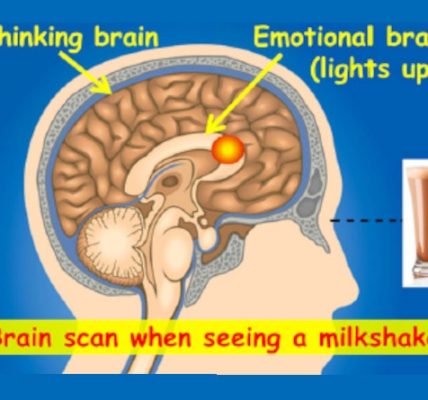
The thing is, no matter how one feels about it or what one believes ought to be done about it, many authorities do behave as if sugar addiction exists, even if the terminology dances or tiptoes around it a bit. One says, for instance, “Overeating sugar can mimic addiction patterns,” and “Excessive sugar consumption can affect the brain’s dopamine reward system in a similar way to some illicit drugs.” And no matter how anyone phrases it, the stuff is pretty-near impossible to avoid.
Sugar is so entrenched in our culture, its presence everywhere is seen or felt as a natural phenomenon, no more changeable than the weather. The “visions of sugarplums” meme is irrevocably embedded in our culture. The inability of children to resist sweets is one of the bedrock beliefs that we so much take for granted, there is no point in revisiting it. And that is always a bad sign.
If you find it difficult to get excited about the sugar addiction problem, try a thought experiment. Read the labels on every food item in your kitchen, and upon every sighting of one of the many terms for sugar, mentally substitute the word “opium.”
When you see an advertisement for a soft drink, visualize the five teaspoons of opium in it. On Valentine’s Day, when presenting your loved one with a heart-shaped box of candy, pause for a moment to consider that every piece contains opium. When a relative gives your child an Easter basket, it’s full of opium. It’s kind of funny how, every year, somewhere in America, there is a scare story about bad neighbors who toss some drug or even poison into the kids’ plastic pumpkins.
But no… It’s only sugar.
Written by Pat Hartman. First published May 21, 2026.
Source:
“Sugar Addiction: Signs, Risks, and Recovery,” Recovered.org, October 31, 2025.
Image Copyright: Hansuan_Fabregas/Pixabay.