
How Psilocybin Repairs the Brain
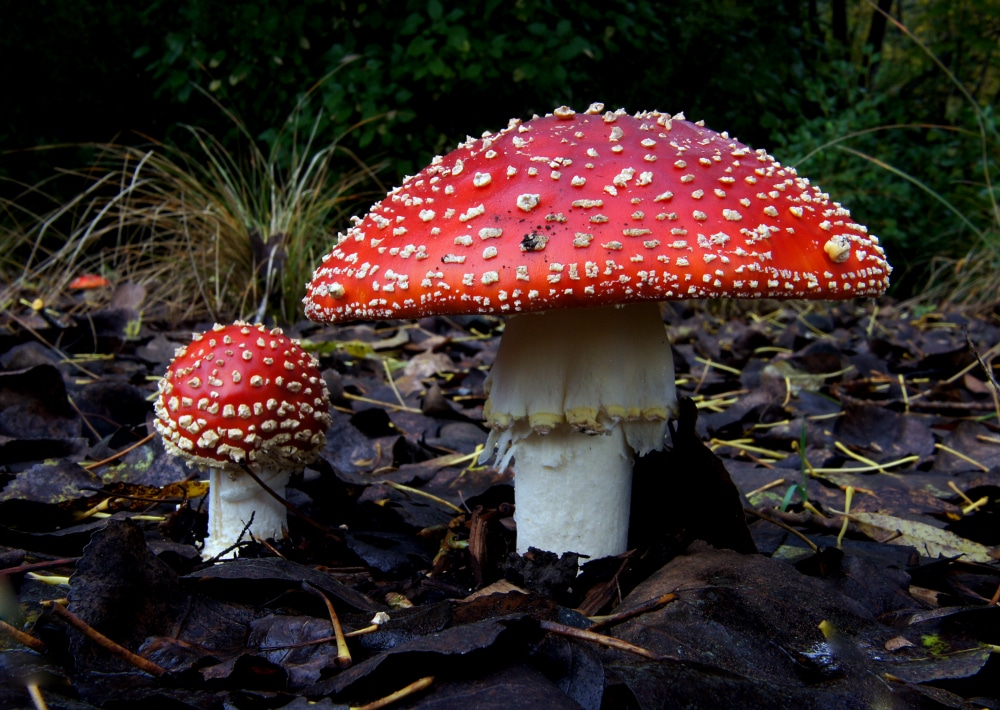
A new study released in the scientific journal Cell finds that the hallucinogenic drug, psilocybin, the active ingredient in “magic mushrooms,” has the potential to repair brain networks damaged by depression and drug addiction.
The study involves a large international team of researchers in neuroscience and psychiatry led by Dr. Alex C. Kwan, head of the Kwan Lab, “a systems neuroscience lab” at Cornell University in Ithaca, New York. According to his biography,
[Dr. Kwan] is broadly interested in the neurobiology of drugs for treating mental illnesses. His research has revealed how ketamine and psychedelics act in the brain to enhance neural plasticity.
The study published in Cell was conducted with rats. The full text of the study is available online, complete with videos and numerous full-color slides and minute details of a whole series of experiments tracing psilocybin through the brain. “The results support two important conclusions,” the researchers summarize:
1. Psilocybin strengthens pathways that route sensory inputs to subcortical regions.
2. Psilocybin weakens inputs associated with cortico-cortical feedback loops.
“One dose of psilocybin induces structural remodeling of dendritic spines in the medial frontal cortex in mice,” the researchers state. One result is the weakening of feedback loops in the brain implicated in “rumination” for persons with severe depression.
The findings were simplified by Louis Prada for VICE:
[P]silocybin might be rewriting our brains to eliminate the toxic negative thought loops of depression that relentlessly hammer at us when we’re at our lowest.
A systematic review of the use of psilocybin for treating substance use disorders (SUD) was published by Neuroscience & Biobehavioral Reviews in June this year. The review summarized 26 ongoing clinical trials and 16 published studies. They found “significant reductions” in alcohol use and nicotine cessation.
While researchers found some improvement for people suffering from opioid use disorder (OUD), there was no evidence of effectiveness in treating cocaine use disorder (CUD). The results are somewhat muddied by the fact that some studies included cognitive behavioral therapy (CBT), and the share of the improvement accorded to the therapy might be attributed to the psilocybin.
An earlier review of the use of psilocybin for treating SUDs in human studies, not rats, also found a “therapeutic effect.” The Dutch authors explain how it works:
After psilocybin administration cortisol levels spike and activate the executive control network, with subsequent increased control over emotional processes, and relief of negative thinking and persistent negative emotions.
The authors note the chemical similarities between psilocybin and serotonin, and how disruptions in the serotonin system are “associated with alterations in stress hormones, such as cortisol, and mood disorders.”
Addiction degrades “cognitive control functions” that may be strengthened by psilocybin. “[P]silocybin may thus exert long-term anxiolytic effects in humans, including SUD patients,” the researchers say. They optimistically conclude:
With the reported limited amount of side effects, and potential beneficial effects of psilocybin in SUD, we strongly believe that there are valid reasons to further investigate the therapeutic efficacy and safety of psilocybin as a potential SUD treatment.
Sadly, those words were written in 2016, nearly 10 years ago, and there have been few human studies since. Perhaps the pharmaceutical companies don’t see a financial windfall in using a natural substance to treat SUDs? Hopefully, the promising new research we have reviewed here will stimulate an increase in trials.
Written by Steve O’Keefe. First published December 29, 2025.
Sources:
“Psychedelics Might Fix Your Depression by Rewiring Your Brain, Study Finds,” VICE, December 18, 2025.
“Psilocybin triggers an activity-dependent rewiring of large-scale cortical networks,” Cell, December 5, 2025.
“Efficacy and safety of psilocybin for the treatment of substance use disorders: A systematic review,” Neuroscience & Biobehavioral Reviews, June 2025.
Image courtesy of Wikimedia Commons, used under Creative Commons license.