Do GLP-1 Drugs Work By Reducing Displacement?
GLP-1 receptor agonists, also known as GLP-1RAs, or simply GLP-1 drugs, were developed from the venom of a gila monster lizard. The venom contains the protein exendin-4, which is similar to the human digestive hormone, GLP-1.
The gila monster in captivity eats about once every two weeks, but can go months without eating anything. The exendin-4 regulates blood sugar so that the lizard can digest meals more slowly.
From exedin-4 came exenatide, synthesized in a lab. The first GLP-1 receptor agonist, exenatide, was approved by the U.S. Food and Drug Administration (FDA) for the treatment of Type 2 diabetes in 2005.
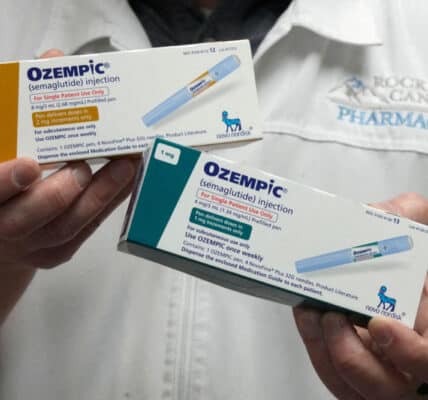
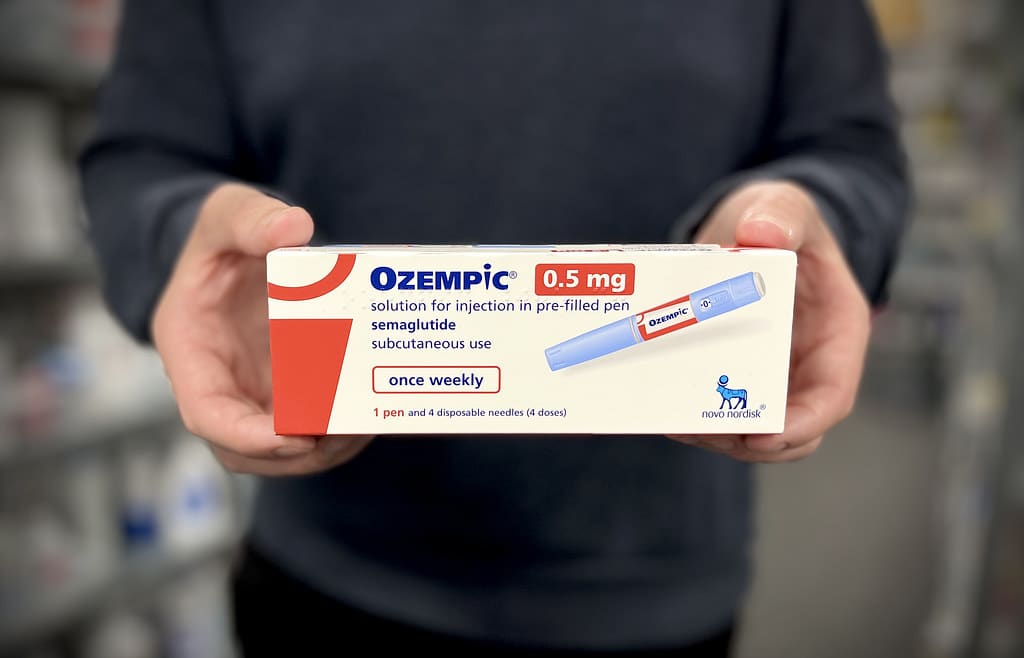
In 2008, pharmaceutical company Novo Nordisk began clinical trials with semaglutide, an analog of exenatide. It was only in 2017 that the FDA approved the use of semaglutide sold under the name Ozempic for the treatment of Type 2 diabetes.
By this time, there was abundant evidence that using GLP-1 drugs for Type 2 diabetes resulted in significant weight loss. Novo Nordisk conducted clinical trials of semaglutide for weight loss, and four years later, in 2021, the FDA approved the sale of semaglutide under the name of Wegovy for weight loss.
Today, there is abundant evidence that GLP-1 drugs significantly reduce cravings for alcohol and other drugs of abuse. Earlier this month, The New Yorker ran an article about the use of GLP-1 drugs to treat addiction written by Dr. Dhruv Khullar, a professor at the Weill Cornell Medical College. Dr. Khullar says of the mounting anecdotal evidence:
[I]t’s increasingly clear that GLP-1 affects much more than eating. GLP-1 drugs, which bind to the body’s receptors for hours or days, are now being studied for all sorts of addictions.
Dr. Khullar points to studies showing GLP-1 drugs are effective in treating tobacco addiction, alcohol use disorder, and opioid use disorder. He visited a lab in Colorado where a trial of GLP-1 drugs against alcohol use disorder (AUD) was just completed. Preliminary results show that after 60 days, these heavy drinkers consumed half as much alcohol and more than halved the number of days they drank excessively.
Dr. Joseph Schacht, the lead researcher in the study, has more than just anecdotal evidence that GLP-1 drugs reduce cravings. Participants are subject to extensive cue-sensitivity testing, “torturing” people with glasses of alcohol they’re not allowed to drink from, and hours of triggering images while their brains are scanned with fMRI.
Dr. Schacht believes these measures can absolutely tell if a person suffers from AUD. They also tell him what happens when people with AUD take GLP-1s. Their cue-reactivity goes to zero, stone cold nothing. Show someone with AUD an image of their favorite alcoholic beverages, and their brains don’t light up like they used to, according to Dr. Schacht.
Dr. Khullar writes about scientific research that demonstrates GLP-1 drugs might also be effective against behavioral disorders, including compulsive shopping and gambling addiction. He quotes Dr. Heath Schmidt, director of the Laboratory of Neuropsychopharmacology at the University of Pennsylvania:
GLP-1s might be telling us that there’s some kind of universal pathology when it comes to addiction. And that they’re part of how we fix it.
“Universal pathology” sounds a lot like the unified theory of addiction. AddictionNews was founded with the purpose of exploring the science behind a unified theory of addiction. Dr. Robert Pretlow, publisher of AddictionNews, posits that both behavioral compulsions and substance addictions are the result of displacement.
Displacement is the result of a buildup in neural energy caused by the stress of feeling trapped between what you’re doing and what you’d rather be doing. In fact, studying the behavior of trapped animals is what led to the theory of displacement. Numerous studies of addiction in mice corroborate the findings.
Dr. Khullar relies quite a bit on the anonymous stories of people participating in clinical trials of GLP-1 drugs against AUD. One participant who thought about alcohol every waking moment said, “Because alcohol was no longer an issue, all of this energy was released.” The energy she is talking about, the fire in the brain Dr. Schacht sees in his scans, the “food noise” that fuels eating addiction, is the evidence of displacement seeking an outlet.
Where does that nervous energy go for people using GLP-1 drugs? Why does the food noise subside, the alcohol noise quiet, the cue sensitivity disappear, and the cravings wither? We will explore those questions — and the second half of Dr. Khullar’s article in The New Yorker — in the next edition of AddictionNews.
Written by Steve O’Keefe. First published February 26, 2026.
Sources:
“Can Ozempic Cure Addiction?,” The New Yorker, February 9, 2026.
“What GLP-1s Know About Addiction,” The Brian Lehrer Show, WNYC, February 17, 2026.
Image Copyright: chemist4u, used under Creative Commons license.