Opioid Use Disorder at Colleges and Universities

It’s hard to imagine a more idyllic-sounding environment than Pleasanton, California. Nestled in the Tri-Valley area on the East Bay between Freemont and Oakland, it has a relatively high median household income of around $186,000 with mostly-suburban neighborhoods. Pleasanton is home to the Alameda County Fair.
It is sad to read, therefore, in the Pleasanton Weekly, that opioid overdose deaths have increased dramatically in Alameda County. In a publication on opioid use disorder (OUD), the county said there were 301 opioid-related overdose deaths in 2023. That’s a 60% increase over 2022.
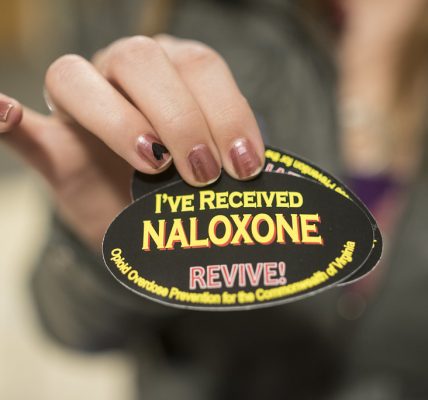
The climb in overdose deaths is related to fentanyl and other high-potency synthetic opioids. Despite an exemplary statewide effort to make naloxone more widely available, many of the new synthetic opioids do not respond to naloxone.
Pleasanton is near the California State University, East Bay, in Hayward, California, where the university is taking a proactive approach to OUD. The University offers one program tailored for the needs of students, and another for members of the community:
Student Health & Counseling Services (SHCS) is an outpatient clinic staffed by physicians, nurse practitioners, counselors, and mental health professionals. Their homepage contains information on where to find Narcan (naloxone) on campus, with a link to a YouTube video on how to administer it. SHCS offers medication-assisted treatment for OUD and other substance use disorders.
Community Counseling Clinic (CCC) provides “counseling services that contribute to the mental health and welfare of individuals in the community.” The CCC does not provide medical services and does not serve CSU East Bay students, who are covered by SHCS. They provide counseling services by graduate trainees studying to be licensed marriage and family therapists. Services are supervised by the Department of Educational Psychology at CSU East Bay.
The Pleasanton Weekly points us to another idyllic location, the Lehigh Valley of Pennsylvania, where a team of researchers at Penn State conducted a survey on student opioid use. Nearly a third of the students surveyed (32.5%) said they knew someone who had overdosed, and 20% said they knew someone addicted to opioids.
The Penn State research is based on a very small sample of 130 surveys distributed and 118 returned in useful condition. A much more rigorous national survey of drug use among college students found that less than half of one percent (0.44%) had misused opioids in the previous month.
The Boston University School of Public Health research is based on a sample size of 176,191 collected by the Healthy Minds Study between 2017 and 2020. While the study found a noticeable correlation between opioid misuse and anxiety/depression, it does not indicate whether the mood disorder led to OUD or resulted from it.
One thing the Boston University research shows for certain is that students are not getting the help they need to deal with OUD. Less than half of the students screened with OUD and anxiety/depressive disorder accepted treatment when offered.
The researchers call for better coordination between mental health services and addiction treatment services on college campuses. They also stress the need to educate students about how to assist peers who might benefit from addiction treatment or mental health services.
The Penn State research shows that 20% of students know someone who has a problem with opioids. Equipped with information about naloxone, medication-assisted treatment, and campus mental health services, students are a largely untapped resource in the battle against OUD and overdose deaths.
Written by Steve O’Keefe. First published December 11, 2025.
Sources:
“The college opioid crisis: The struggle of opioid addiction among college students,” Pleasanton Weekly, December 6, 2025.
“Opioid misuse and mental health in college student populations: A national assessment,” Journal of Affective Disorders, October 15, 2024.
“College students may face pressures from opioid epidemic’s secondary effects,” Penn State Lehigh Valley, August 11, 2018.
Image of California State University, East Bay, courtesy of Wikimedia Commons, used under Creative Commons license.