
Vaping Ruins Voices
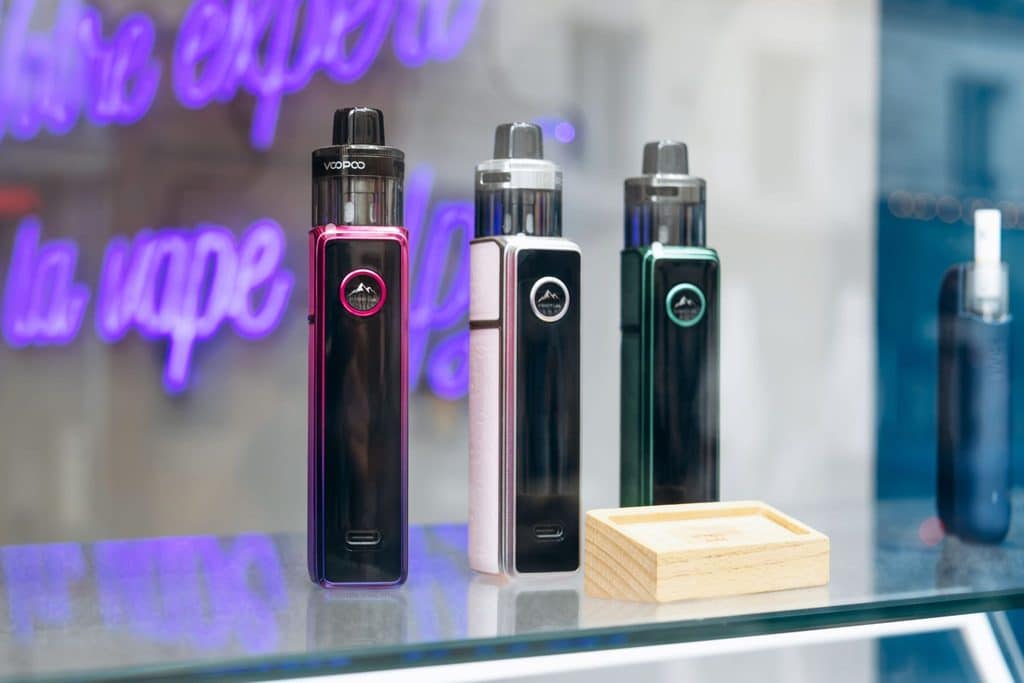
A few months ago my colleague Steve O’Keefe reported that the FDA posted a new set of guidelines allowing e-cigarette and vaping devices to come onto the market without full safety approvals.
Now, vaping is back in the news cycle thanks to Trump administration political adviser Chris LaCivita and his son, Chris LaCivita, Jr., a lobbyist for Hillfield, a U.S. vape importer. The two men have helped retailer Geek Bar capitalize on the administration’s loosening of tobacco regulations and the release of tens of millions of dollars worth of detained illegal Chinese vapes into the U.S. market earlier this summer, reports The Wall Street Journal.
Chris the Younger received a nice paycheck for his efforts, too: Hillfield has paid his firm, Checkmate Government Relations, $860,000 since late 2025, according to lobbying disclosures cited by the Journal.
Maybe I’m just blowing smoke here (…exhale…), but sniff, and one can get a whiff of nepotism. Nice of Chris the Elder to give Chris the Younger such insider advantages offered by proximity to the current Administration. Surely, Chris the Elder wants the best for his son. But has he spared a thought about other people’s children? You know, the ones who vape? There happen to be a lot of those.
More than two million American middle and high school students report current use of any tobacco product — including e-cigarettes, nicotine pouches, and combustible cigarettes — according to the latest Annual National Youth Tobacco Survey (NYTS). That’s roughly 7% of people in that age cohort. And 64.1% of middle and high school students who vape reported using Geek Bar, according to the same survey.
It isn’t just kids, either. Over 100 million people worldwide regularly vape. A new study from scientists at Seoul National University looked at the use of non-tobacco devices like vapes and e-cigarettes to help quit smoking. Bad news: Vaping carries a strong link with the development of lung cancer.
As O’Keefe wrote earlier, the truth about vaping’s health impacts is anything but a definite win. While vaping eliminates the carcinogens produced by burning tobacco, the flavorings and other additives in e-cigarettes may also increase cancer risks. (If you’re pairing that vape with a boozy drink, don’t forget, cancer rates linked to alcohol use have doubled since 1990.)
Additional studies are needed to compare the health of former smokers who use vapes to quit and new smokers who start with vaping. Singer and actor Selena Gomez didn’t smoke cigarettes but did vape. She urges people not to do the same, as vaping has damaged her voice.
What’s in a vape? Even scientists aren’t sure. Disclosure of the formulation chemicals in vape flavors is one thing. China produces between 90-95% of the world’s vape products, and these products typically include carrier solvents, nicotine or synthetic nicotine analogs, flavoring compounds, and unintended toxic contaminants. Shipments include legal vaping products as well as disposable products that skirt regulation disclosures.
A bigger problem is that the health effects of any flavor or flavor combination have not been studied in depth.
Andrea Hobkirk, an associate professor of neuroscience and experimental therapeutics, public health sciences, and psychiatry and behavioral health at Penn State College of Medicine, is investigating. She recently completed a pilot clinical trial to determine whether flavor additives like popular fruit flavors make vaping more addictive. She studied hexyl acetate, a flavor additive known to affect the nervous system. According to Dr. Hobkirk,
Researchers found a marked difference between the participants who used the hexyl acetate vape and the other group.
Hobkirk said the findings suggest that certain flavor additives may affect the brain’s reward system in ways similar to nicotine.
“When people start using nicotine and become dependent on it, it makes them more responsive to rewards,” she said. “We’re seeing a similar effect here. They became more responsive with the neuroactive flavor.”
The findings raise more questions about what’s really inside vaping products, Hobkirk said.
“We don’t know the full effects of the flavor additives,” she said. “Products are coming out now that have things like synthetic nicotine being sold as less addictive, but we don’t know what happens when you add it to a potentially addictive flavor chemical. Does it now make nicotine more addictive? We don’t know yet.”
Even if science can’t yet answer the question about whether or not additives make vaping more addictive, there are still reasons to reconsider use. Vaping still reinforces the stress displacement that drives all addictions. Add in hundreds, maybe thousands, of potential vape flavors for the brain’s delight and the cycle of cue, use, stress displacement, repeat, can quickly escalate. It can also ruin your voice and enrich people who don’t care about your health.
Written by Katie McCaskey. First published November 17, 2026.
Sources:
“Powerful Trump Allies Aided a Chinese Vape Operation,” The Wall Street Journal, November 13, 2026.
“Results from the Annual National Youth Tobacco Survey (NYTS),” U.S. Food & Drug Administration, accessed November 15, 2026.
“The Impact of E-Cigarettes on the Lung,” The American Lung Association, accessed November 15, 2026.
“Father-son Trump insiders tied to White House release of millions in seized products,” Raw Story, accessed October 12, 2026.
“Vapor Hiding Dangerous Ingredients,” American Lung Association, July 11, 2025.
“Vaping Strongly Linked to Lung Cancer,” Futurism, accessed November 15, 2026.
“Electronic cigarette use after smoking cessation and lung cancer risk,” Nature Medicine, June 8, 2026.
“Selena Gomez says vaping has changed her voice. Can e-cigarettes really affect your vocal cords —– and is it reversible?,” The Guardian, November 10, 2026.
Image Copyright: andreiantipov.