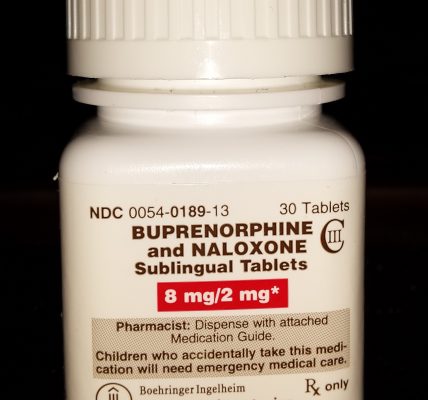
Hard Line on Drug Addicts Is Expensive and Deadly
The Trump administration has laid out a plan for dealing with drug addiction that relies on incarceration rather than treatment, while dramatically reducing the federal government’s expenditures on addiction treatment and addiction research.
How’s that working out?
We get our first glimpse of what this aggressive stance means for cities and counties from Los Angeles. In November 2024, Californians passed Proposition 36, a “get tough on crime bill” that also funded an increase in addiction treatment services.
As a result of Prop. 36, the Los Angeles County Jail has had, on average, 700 more prisoners than previously. Those who were receiving medication-assisted therapy (MAT) upon intake are allowed to continue on it in jail.
Inmates who want to start MAT must get on a waiting list. Before Prop. 36, the waitlist was 363 people. As of October 31, that number had “skyrocketed” to 835 people according to Cayla Mihalovich, justice reporter for CalMatters. Other stats from a recent article on Prop. 36 include:
- 13,000 Los Angeles County Jail inmates across nine facilities
- 2,500 inmates receive daily medication-assisted treatment
- In 2016, 9% of deaths in custody were overdose deaths
- In 2025, 28% of deaths in custody were overdose deaths
The application of Prop. 36, designed to scoop up more people and divert more of them into treatment rather than jail, has been a disaster. Of the 9,000 defendants statewide offered the treatment route rather than prison, only 1,290 chose the option.
Of those 1,290, only 771 have been placed into MAT so far. And of those 771, only 25 individuals have completed treatment. Mihalovich quotes a representative from the California District Attorneys Association:
The goal of this ballot measure was to take that population of people who have a substance use disorder and get them help, find them a pathway out of the criminal justice system and dismiss their cases. And that doesn’t seem to be what’s happening across the state.
California is not the only state struggling with the incarceration of people with substance use disorders (SUDs). Legislators in Wisconsin have finally woken up to the fact that they are first in the nation in the cost of recidivism — released inmates reincarcerated.
One of the reasons people are being rearrested, according to the Milwaukee Journal Sentinel, is SUD. People who leave custody with an SUD have a higher rate of rearrest than those who do not. Therefore, Wisconsin is considering legislation to invest in MAT for inmates both prior to and after their release.
Medicaid will finance MAT in prison and after release for states that file Section 1115 waivers, as 19 states have done. The Milwaukee Journal Sentinel reports that 63% of the state’s prison population suffers from an SUD. In the past year, they estimate 420 inmates have been released from prison with an SUD.
Just as Prop. 36 has resulted in a “shocking” number of inmate overdoses and overdose deaths in California, so too Wisconsin’s released convicts are overdosing and dying at alarming rates. The Milwaukee Journal Sentinel cites numbers from 2021, showing 276 overdose deaths and 754 hospitalizations for opioid overdose in the first year after release.
The states are on their own when it comes to coping with the increased caseloads due to tough on crime laws combined with reduced federal funding. We have reported previously on what some states are doing to cope. For the present, it looks like greater costs and more overdose deaths are the likely result of the push to incarcerate drug addicts rather than treat them.
Written by Steve O’Keefe. First published December 1, 2025.
Sources:
“LA jails scale back opioid addiction treatment as fatal overdoses continue,” CapRadio, November 17, 2025.
“California’s Prop. 36 promised ‘mass treatment’ for defendants. A new study shows how it’s going,” CalMatters, October 13, 2025.
“Wisconsin pays more than any state for recidivism. Could addiction treatment change that?,” Milwaukee Journal Sentinel, November 17, 2025.
Image Copyright: pixhound.