The Rise and Fall of THC Drinks
Hiding inside the 2018 Farm Bill, the so-called hemp law loophole made it lawful in all 50 states to grow hemp and process it into products that could be sold and shipped to retail and wholesale customers in all 50 states.
Some state legislatures quickly amended their laws to make these hemp-based products illegal to sell or transport. However, at the end of October, 44 states allowed for the sale and transport of hemp-based products.
Scientists quickly learned ways to follow the limits in the hemp law loophole and still create intoxicating products with equivalent potency to cannabis. These products often include a blend of THC and CBD, including varieties such as Delta-8 and Delta-9 cannabinoids that can pack a potent punch.
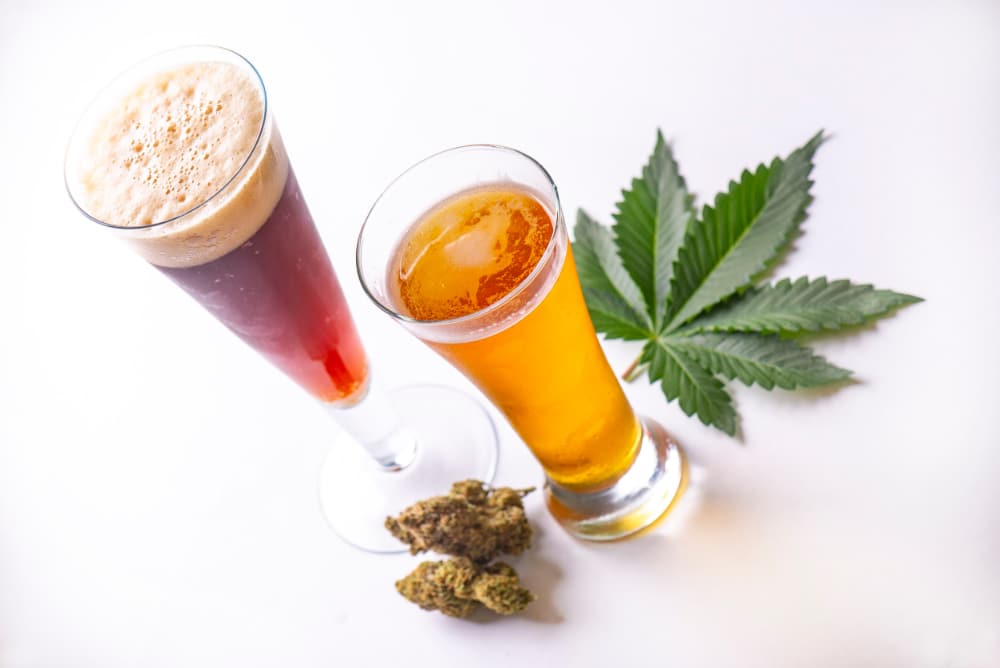
The hemp law loophole has launched hundreds of interstate industries growing hemp and processing it into oils, gels, gummies, chocolates, flower, resin, and concentrates. Nothing has taken off quite so fast, however, as THC-infused drinks.
In October of this year, CBS News MoneyWatch gushed about the commercial potential of THC drinks:
More people are now reaching for cannabis beverages, nonalcoholic drinks infused with tetrahydrocannabinol, or THC, the main ingredient in marijuana that makes you feel high. Some varieties also include cannabidiol, or CBD, a chemical compound found in marijuana or hemp that proponents say helps relieve pain, anxiety and other health symptoms.
CBS cites a market report by Whitney Economics, a forecasting firm specializing in the hemp and cannabis industry, predicting that the $1.1 billion dollar THC drinks industry in 2024 will grow to 5.6 billion by 2035.
CBS interviewed a very enthusiastic Matt Shirah, CEO of Scofflaw Beverage Company of Atlanta, Georgia, maker of THC drinks, who said, “The THC infused business has the potential to be 10 to 20 times the size of [the] beer business.” Not just bigger than the beer business; 10 to 20 times bigger. Really?
Imagine his disappointment when, just two months later, President Trump signed the bill ending the government shutdown, and hidden inside that bill is a clause that ends the hemp law loophole.
Suddenly, none of the intoxicating products developed to meet the hemp law loophole will be legal to manufacture, transport, or sell nationwide. Companies will no longer be able to ship these products using the U.S. Postal Service. Other shippers will be required to prohibit these items as well.
The Philadelphia Inquirer has a feature story by frequent cannabis writer, Henry Savage, about what the end of the hemp law loophole means for Philly. Like the CBS News reporter, Savage writes like he’s recently consumed a THC drink:
The billion-dollar intoxicating beverage industry exploded in recent years, with THC-infused seltzers, lemonades, and teas that resemble popular products like Surfsides or White Claws. Sold in local gas stations, smoke shops, and liquor stores outside of Pennsylvania, these weed drinks deliver a cannabis high that is infused into bubbly, sweet canned beverages.
In the two months between the CBS News MoneyWatch story, which mentioned the potential for Target stores to start selling THC drinks, and The Philadelphia Inquirer story about the decimation of the industry, our friends at Whitney Economics upped their forecast. They told CBS News 5.6 billion by 2035, and they told Henry Savage $15 billion “in the coming years.”
Apparently, THC drinks do have the ability to distort reality, which might account for the enthusiastic market predictions. CBS News medical contributor Dr. Céline Gounder points out the health considerations:
[T]he drug can trigger anxiety, paranoia, elevated heart rate and, in rare cases, psychosis. Potential short-term effects of cannabis include issues with memory, focus and coordination… Heavy or long-term intake of the drug, especially in teens, can lead to lasting issues with memory, attention and decision-making.
All of these intoxicating hemp-based products can still be sold through dispensaries in states that have legalized medicinal cannabis. But, as Washington State found out, that’s a small market compared to unrestricted adult sales. When Washington restricted sales of hemp products to dispensaries, the market for hemp “cratered,” according to Steve Karnowski and Gene Johnson at the Los Angeles Times.
The number of licensed hemp growers in Washington State has declined from 220 in 2020 to an estimated 10 in 2026. So much for explosive growth. California is also restricting sales of hemp-based products to licensed cannabis dispensaries in a bill signed two months ago.
Both The Philadelphia Inquirer and the Los Angeles Times discuss lobbying efforts by the hemp industry to reverse parts or all of the new law. The idea is to pass a new hemp law that would allow hemp and cannabis businesses to develop while more tightly controlling production, distribution, and sales.
The days of seeing THC drinks at grocery stores, restaurants, and gas stations are over for most of the country. It’s possible THC drinks will be able to find regulation through the adult beverage industry. THC drinks might even have potential for detox from alcohol use disorder. We’ll pick up that story in the near future.
Written by Steve O’Keefe. First published December 15, 2025.
Sources:
“Popular THC drinks will soon be illegal. Companies are fighting to save the billion-dollar industry,” Philadelphia Inquirer, December 5, 2025.
“Cannabis drinks are having a moment even as Americans consume less alcohol,” CBS News MoneyWatch, October 20, 2025.
“What a federal ban on THC-infused drinks and snacks could mean for the hemp industry,” Los Angeles Times, November 28, 2025.
Image Copyright: rgbspace.